


2025 Chevy Silverado EV vs 2025 Tesla Cybertruck
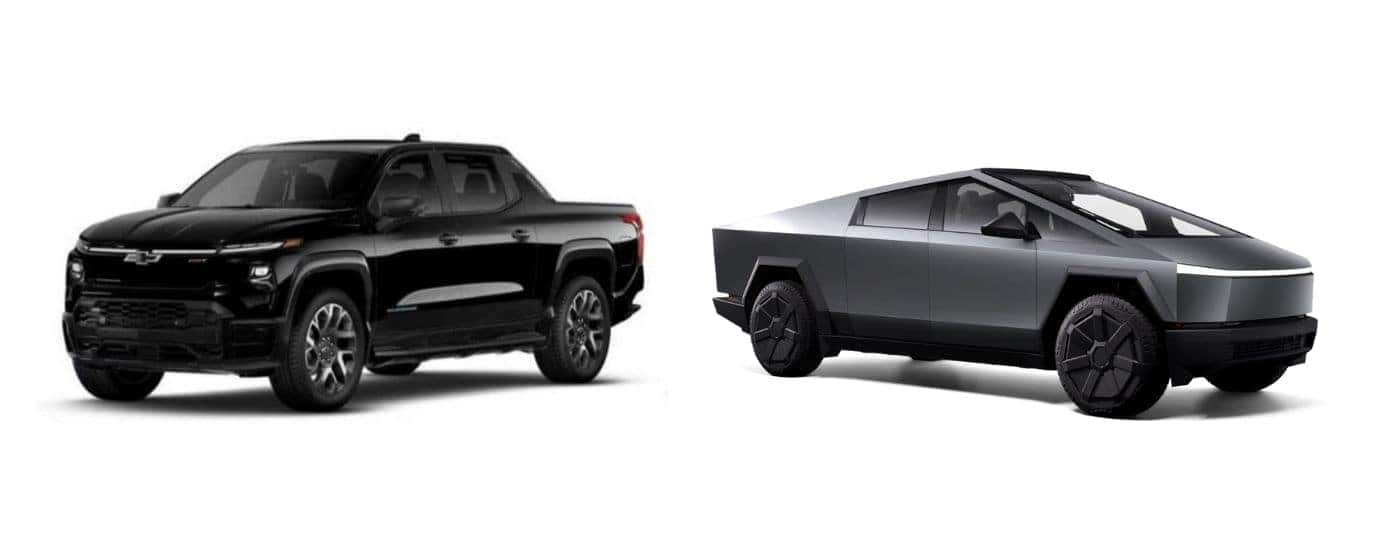
In order for an all-electric pickup to succeed on today’s market, it needs to be just as capable as its gas-powered competitors. Those accustomed to your typical sedan or SUV might not mind sacrificing a little performance in the name of improved efficiency, but the same doesn’t necessarily hold true for the historically hardworking pickup segment.
Luckily, EV technology has come a long way over the last decade, with today’s all-electric models matching and even surpassing the horsepower and towing ability of internal combustion models. Take the 2025 Silverado EV, for example. Boasting 760 hp and 12,500 lbs of towing, the Silverado can compete with any other full-size model while offering the sort of efficiency and low ownership costs that are hard to beat.
While pure horsepower and towing acumen are always going to top the list when shopping for your next full-size truck, an EV’s range and charging ability are just as vital. The 2025 Silverado EV’s massive battery and class-leading charging speed go a long way towards reducing any range-related anxieties that might keep drivers from exploring the EV segment while delivering the sort of top-tier performance they’ve come to expect from the Chevy brand.
Drivers should also stop to consider how the model was constructed. While most full-size pickups stick with the proven body-on-frame approach, others utilize a unibody design that can be a little underwhelming when it comes time to put in some real work. The Silverado EV is clearly a standout in the new pickup EV segment, but how does it stack up against one of the industry’s most publicized models in the Tesla Cybertruck? Let’s compare both models and see if the Silverado can earn the gold against the Cybertruck as we pit the 2025 Chevy Silverado EV vs 2025 Tesla Cybertruck. We’re confident that after examining the stats, the Silverado EV comes out as the clear winner for a number of reasons.
| 2025 Chevy Silverado EV | VS | 2025 Tesla Cybertruck |
|---|---|---|
| $73,100 [a] | MSRP | $54,780 |
| 57.7 cu.ft. | Cargo Space | 56.2 cu.ft. |
| 12,500 lbs | Towing | 10,000 lbs |
| 539 | Range | 366 |
Performance and Towing
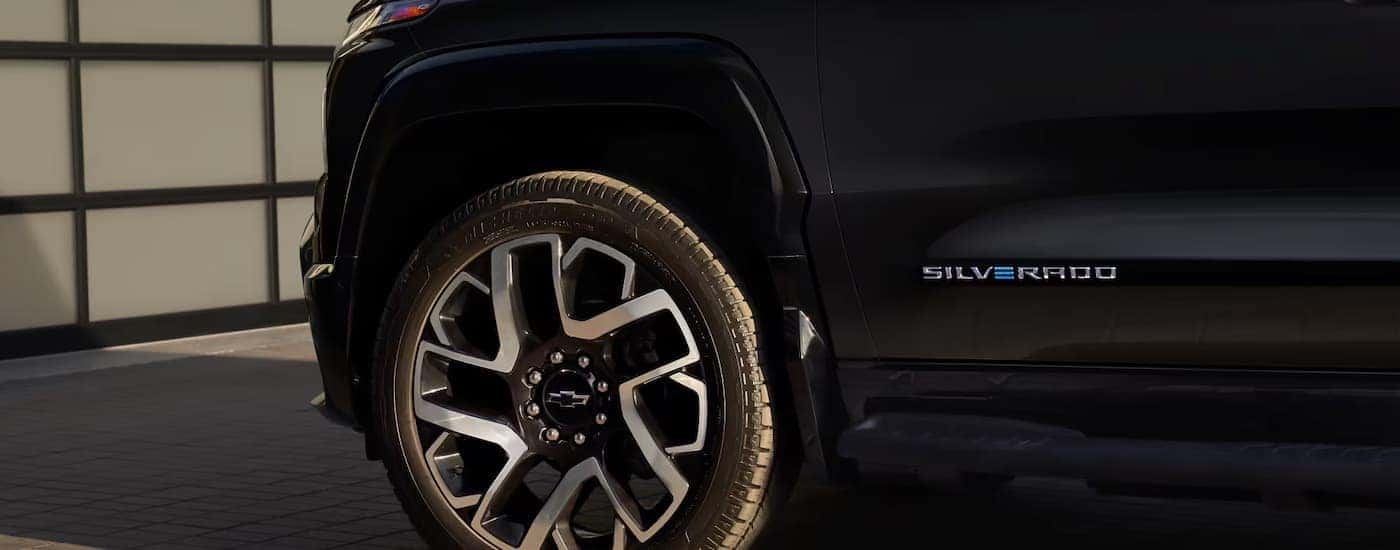
An entry-level model that can churn out over 500 hp would be headline news in a traditional truck, but it’s just par for the course when it comes to the Silverado EV. When equipped with the Standard or Max Range batteries, the base Work Truck (WT) trim is able to offer 510 hp and 580 lb-ft. of torque while delivering the same 12,500-lb towing capacity across the lineup, which eclipses the Cybertruck’s max 11,000-lb towing capacity.
It’s an impressive start for the Silverado EV, and it only gets better from there. The Silverado’s LT and RST trims both provide 645 hp and 765 lb-ft. of torque when paired with the 170-kWh Extended Range Battery, while opting for the Max Range pack sees the RST’s output increase to 760 hp.
Modern EVs are exceedingly speedy thanks to the instant torque that their electric motors can provide, and both the RST and LT feature Chevy’s Wide Open Watts (W.O.W.) Mode that unlocks the Silverado’s full potential by ignoring the truck’s standard power settings. W.O.W. Mode allows the EV to accelerate from zero to 60 mph in as little as 4.1 seconds, and while it will reduce the truck’s total range, it’s a small price to pay for the sort of excitement it can provide.
The Tesla’s Long Range RWD trim is more affordable than your average Cybertruck, but that budget price shines through when you get a look at the truck’s performance stats. With just 315 hp to its name, the Long Range RWD trades on its range instead of its power. That’s certainly understandable, though it’s largely achieved through the use of a RWD setup that isn’t exactly geared to feats of pickup strength.
The Cybertruck’s All-Wheel Drive model addresses the entry-level version’s shortcomings with an additional electric motor, but it’s held back by the same 123-kWh battery. The trim is even harder to justify when you factor in its 325-mile driving range, which could make the Cybertruck a tough sell for those who don’t want to wait around for their vehicle to charge.
The tri-motor Cyberbeast loses an additional five miles of range, though most drivers are probably gravitating towards the trim for its 845 hp and 2.6-second zero-to-60-mph time. Tesla also seems to be pulling off a little funny business with the Cyberbeast’s torque, which is officially listed at 10,296 lb-ft. That figure might seem impossible, and is only explained by the fact that Tesla chose to employ its own unique measuring approach by calculating torque at the wheels instead of at the motor itself, as is the industry standard.
Range
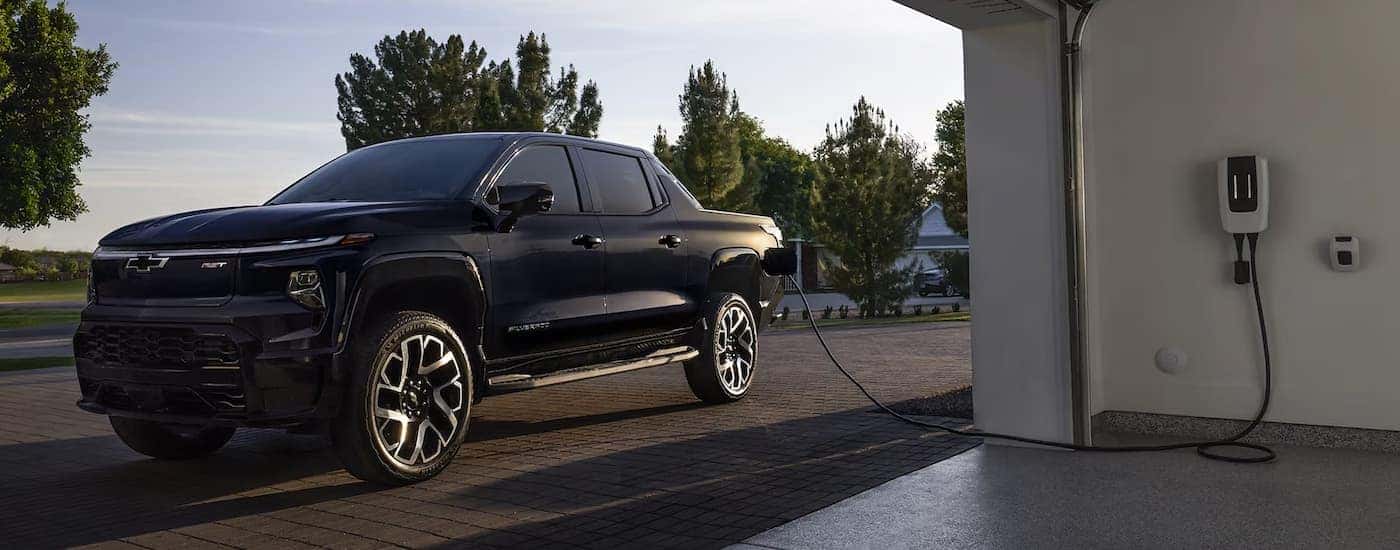
The 2025 Silverado is available with three of GM’s cutting-edge Ultium batteries: a 119-kWh Standard Range pack, a 170-kWh Extended Range pack, and a 205-kWh Max Range pack that allows the pickup’s WT trim to travel up to 492 miles on a single charge. The Max Range battery might perform even better in real-world conditions, getting up to 539 miles from the Silverado’s largest pack. That number drops to 460 miles when the Max Range battery is paired with the range-topping RST trim, but that still trends well above the current industry average of around 300 miles.
While the RST can be optioned with either the Max or Extended Range battery and the WT is equipped to handle all three packs, the Silverado LT sticks with the Extended Range battery to offer a range of 408 miles. This is all made possible thanks to GM’s proprietary Ultium battery technology, which represents a notable improvement over your typical EV battery thanks to its modular, scalable design and flexible cell configuration. An EV’s battery is often its most expensive component, but by leveraging these three attributes, Chevy has crafted one of the industry’s largest packs while still keeping the Silverado EV’s price accessible for the average driver.
Innovation and risk-taking have grown Tesla into the brand it is today, but the automaker is quickly falling behind in terms of EV technology. The Cybertruck’s range is Exhibit A. When all-electric vehicles first hit the market, a 122-kWh battery would have blown away the competition, but Tesla’s battery is starting to look a little stunted when compared to Chevy’s Ultium packs.
The Cybertruck’s Long Range RWD trim is the marathon runner of the current lineup with a maximum range of 366 miles. That’s pretty respectable for a modern pickup EV, but there’s one major catch: the number is only made possible by the Long Range RWD’s single-motor setup. Every other Cybertruck trim—as well as the entire Silverado EV lineup—uses a dual-motor design at minimum, which makes the entry-level trim seem underpowered in relation to many of its contemporaries.
While Tesla’s All-Wheel Drive trim manages to extract nearly twice the horsepower from the same 122-kWh battery, it trends dangerously close to average with a total range of 325 miles. This will probably be enough to get you through the average day, but could become a bit limiting when trying to set out on an extended journey or do a little long-distance towing.
The Cyberbeast tops the 2025 Cybertruck lineup, and its paltry 320-mile range can be partially excused by its tri-motor setup. In fairness, the Cyberbeast was designed to prioritize performance over range, and although you can’t argue with the pickup’s 845 hp, it’s a bit impractical when stacked up against the rest of the EV segment.
Construction

The Silverado is bringing something new to the full-size pickup segment with a unique construction method that’s perfectly suited to its EV powertrain. Chevy’s electric pickup is built on the Ultium platform, which allows Silverado’s battery pack to be integrated into the vehicle’s very structure. This built-in battery pack improves the Silverado’s durability by increasing the frame’s rigidity and allows the EV to hang with the body-on-frame vehicles that have long dominated the pickup segment.
Many drivers aren’t aware of an important divide between many modern trucks: while some trucks employ the unibody construction technique used in traditional cars and crossover SUVs, more serious models tend to lean on the rugged body-on-frame method. The Silverado EV splits the difference between the two approaches, which allows it to offer some substantial benefits when it comes to towing strength and efficiency while improving the pickup’s cargo capacity and making it easier to repair in the event of an accident.
Tesla hasn’t done itself any favors with the Cybertruck’s construction, embracing a unibody design that makes the truck a little difficult to take seriously as a jobsite rig or off-road model. One would think that a brand trying to break into the competitive pickup segment would want to set itself up for success with a body-on-frame design or an innovative platform like Ultium, but Tesla defies common sense to saddle the Cybertruck with a unibody design.
In fairness, the automaker did initially plan to build the EV around a stainless steel exoskeleton that would have also served as the truck’s frame, but Tesla abandoned the approach and turned to a more traditional unibody that’s not designed to handle heavy loads and the abrupt impacts that can come with off-road use. The stainless steel body is also exceedingly heavy, which hurts the Cybertruck’s range and repair costs.

Experience the 2025 Chevy Silverado EV for Yourself
The differences between the Silverado EV and Tesla Cybertruck aren’t limited to the EVs’ powertrains, range and construction. The Silverado EV is also one of the fastest-charging models on the market, with the ability to add 80 percent to its range in a little less than an hour and 100 miles in 10 minutes when connected to a public DC charging station.
Tesla’s pickup EV can gain 136 miles in 15 minutes, or about nine miles a minute, versus 10 miles per minute for the Silverado EV. Sure, it’s a small difference, but even a few minutes can have a big impact when trying to create an EV that can match the convenience of a gas-powered model. While charging speed is a critical consideration when selecting an EV, the disparity in price really makes Tesla a tough sell when compared to the Silverado EV.
Chevy’s base model not only comes standard with four-wheel power, but it also easily surpasses the Cybertruck’s range, power, and towing ability. These factors might not make such an impact individually, but when you take them as a whole, it’s hard to understand why drivers would settle for the Cybertruck when options like the Silverado EV exist. Tesla might have been one of the early leaders in the EV segment, but the brand’s advantage has steadily eroded as established automakers like Chevy enter the market.
The all-electric Silverado proves how quickly EVs are evolving by incorporating new technology with the Ultium battery and platform, but some things need to be seen to be believed. At DePaula Chevrolet, we’ll help you find the EV pickup you’ve been waiting for, walking you through each trim, battery, and optional equipment package to create a custom ride that’s perfectly suited to your individual driving needs. We’re also here to answer any questions you might have about the EV lifestyle, from recommendations on charging options to power-saving tips that’ll increase the Silverado’s range and performance potential.