


2026 Chevy Colorado vs 2026 Honda Ridgeline
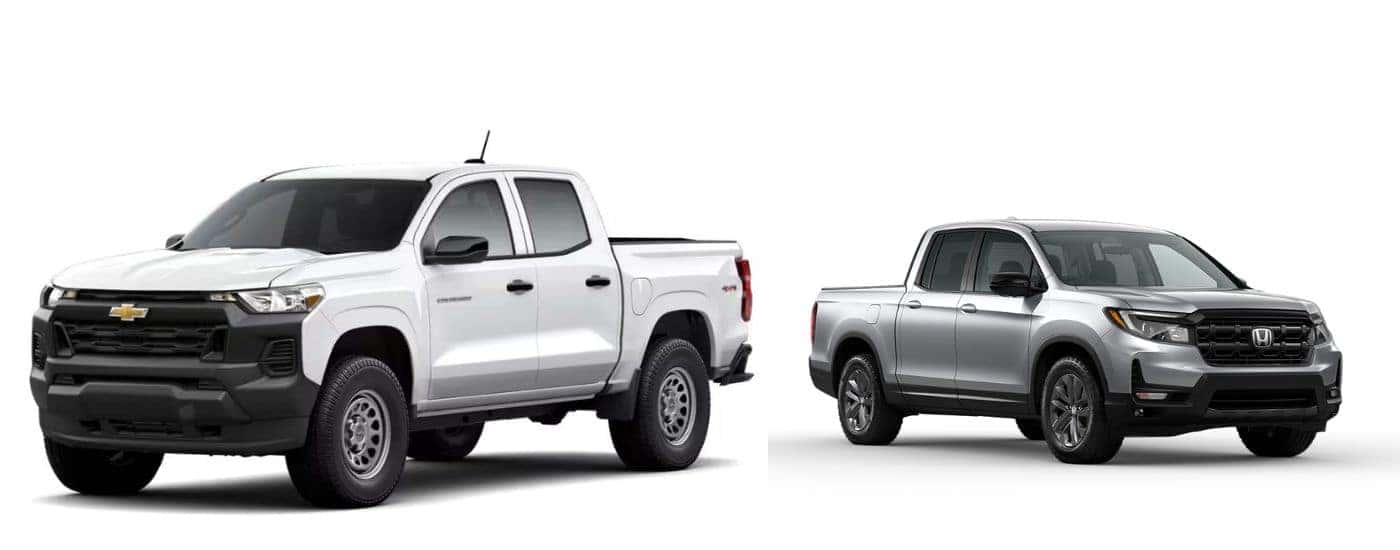
Shopping for a midsize truck today is a lot different from how it used to be. Modern midsize pickups are expected to handle a little bit of everything, from commuting and road trips to towing trailers, hauling gear, and tackling rougher terrain on the weekends. Buyers want comfort and technology, but they also want confidence behind the wheel when it’s time to do real truck work. That’s exactly why the comparison of the 2026 Chevy Colorado vs 2026 Honda Ridgeline attracts attention from drivers looking for something more versatile than a traditional SUV.
Both trucks bring something different to the table. The Honda Ridgeline focuses heavily on smoothness, refinement, and everyday usability, offering a driving experience that feels closer to a crossover than a traditional pickup. The Chevy Colorado takes a different approach. It leans harder into capability, ruggedness, and flexibility, delivering the kind of performance and utility many truck buyers still prioritize most.
For shoppers who want stronger towing capability, more usable bed space, greater off-road potential, and a truck that genuinely feels ready for work and adventure alike, the Colorado ultimately stands out as the stronger all-around choice. And for many drivers, that means Chevy’s truck comes out on top.
| 2026 Chevy Colorado | VS | 2026 Honda Ridgeline |
|---|---|---|
| $32,400 [a] | MSRP | $40,795 |
| 430 lb-ft | Torque | 262 lb-ft |
| 7,700 lbs | Towing | 5,000 lbs |
| 11.3 in | Screen Size | 9 in |
Performance and Capability
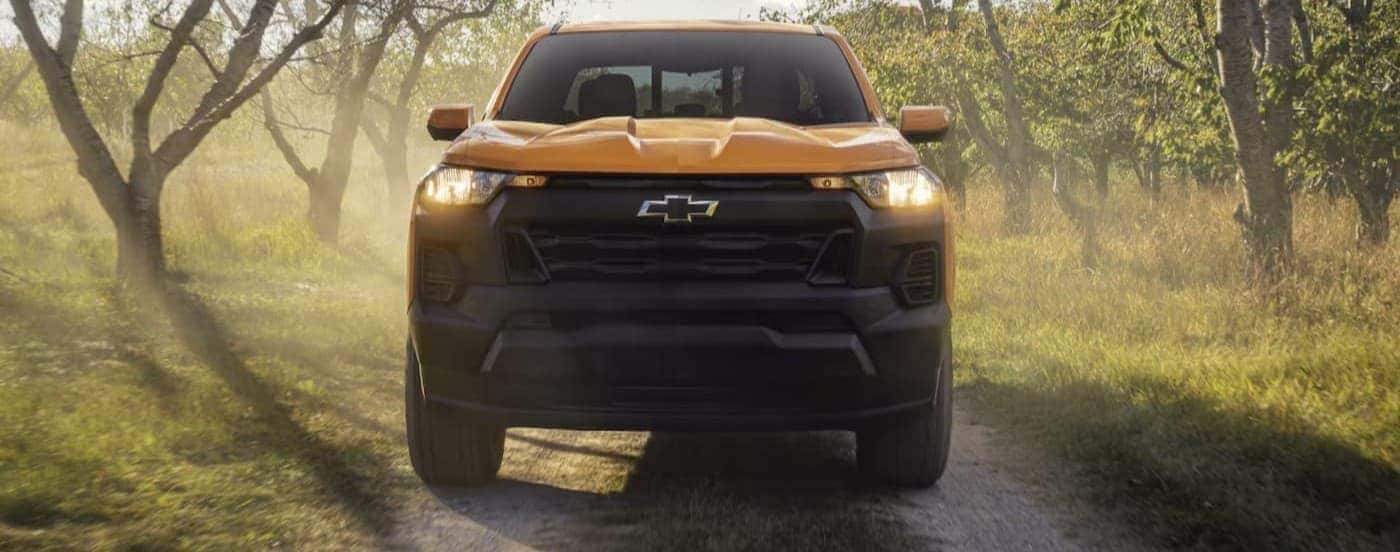
Capability is what separates a true truck from one designed primarily for comfort, and that’s where the 2026 Chevy Colorado creates a noticeable advantage over the 2026 Honda Ridgeline.
Engine Options
The 2026 Colorado comes standard with a 2.7L TurboMax turbocharged I-4 engine producing an impressive 310 hp and 430 lb-ft of torque. By comparison, the 2026 Ridgeline uses a 3.5L V6 engine producing 280 hp and 262 lb-ft of torque. While both trucks offer respectable power for daily driving, the Colorado’s substantial torque advantage changes the overall driving experience in meaningful ways.
Torque is especially important in a truck because it directly affects towing confidence, low-speed pulling power, and acceleration under load. Whether you’re hauling equipment, towing a trailer, or climbing steep grades with passengers and cargo onboard, the Colorado simply feels stronger and more capable. The TurboMax engine delivers its power in a more truck-oriented way, especially during demanding tasks where midsize truck buyers expect dependable performance.
Towing and Payload Specs
That advantage becomes even clearer when towing enters the conversation. The 2026 Colorado offers a maximum towing capacity of 7,700 lbs, significantly higher than the 2026 Ridgeline’s 5,000-lb limit. For buyers towing campers, utility trailers, boats, or work equipment, that difference matters tremendously. It gives Colorado owners more flexibility and room to grow into future towing needs without immediately needing to step up into a full-size truck.
Payload capacity also favors the Colorado. It can handle up to 1,684 lbs of payload, compared to the Ridgeline’s 1,583-lb maximum. While that gap may not sound massive on paper, every extra pound matters when transporting tools, supplies, camping gear, or heavier cargo loads.
Off-Road Capability
The drivetrain philosophies of these trucks also reflect their different identities. The Colorado comes standard with rear-wheel drive and offers available four-wheel drive, giving buyers the kind of traditional truck setup many enthusiasts and outdoor-focused shoppers prefer.
The Ridgeline uses standard all-wheel drive, which certainly helps with bad weather and pavement-focused confidence, but it doesn’t deliver the same rugged, body-on-frame truck feel the Colorado provides.
Chevy also gives buyers more room to explore off-road capability with trims like the Trail Boss and ZR2. These models further reinforce Colorado’s adventure-ready personality and help it appeal to drivers who genuinely plan to explore rough terrain, trails, and remote destinations.
The Ridgeline remains comfortable and easy to drive, especially for buyers who prioritize smooth pavement manners above all else. However, for shoppers seeking greater capability, greater flexibility, and a more traditional midsize-truck experience, the Colorado clearly comes out ahead.
Technology and Interior
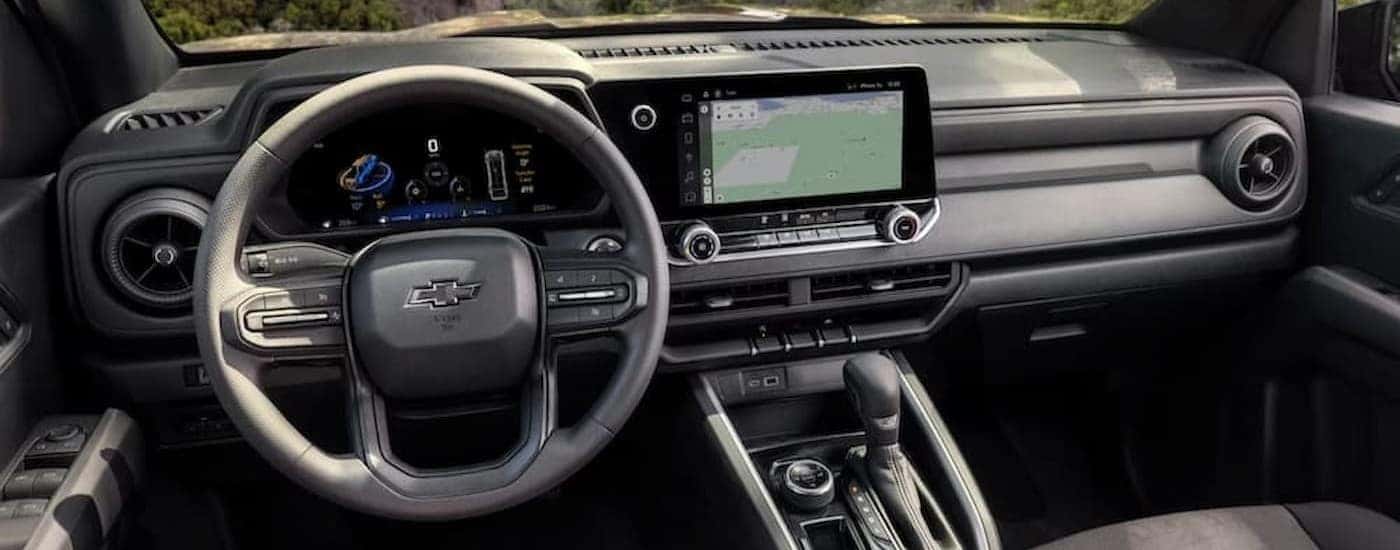
Modern truck buyers expect more than raw capability alone. Technology, connectivity, and interior usability now play a huge role in how enjoyable a truck feels during everyday driving, long road trips, and even jobsite travel. Fortunately, both the Colorado and Ridgeline offer modern interiors, though Chevy’s truck once again delivers the more impressive overall package for buyers wanting a truck that feels fully up to date.
Infotainment and Connectivity
One of the biggest differences between these trucks immediately becomes apparent in the infotainment system. The 2026 Chevy Colorado comes standard with a large 11.3-inch infotainment touchscreen throughout the trim lineup, while the 2026 Honda Ridgeline features a smaller nine-inch display. That larger screen in the Colorado gives the cabin a more modern, upscale appearance. More importantly, it improves usability for navigation, media controls, smartphone connectivity, camera views, and more.
The truth is that a larger display is far from just an aesthetic change. The bigger screen makes it easier to interact with navigation directions, towing information, trailering cameras, and entertainment controls without feeling cramped or cluttered. And when you’re on the road or just getting to grips with your new infotainment center, these things matter more than you may think. The Colorado’s system feels more advanced and more in line with what many buyers now expect from newer vehicles.
Interior Design
Beyond the screen itself, the Colorado’s cabin design better matches the truck’s rugged identity. Chevy gives the interior a stronger truck-focused personality, with bold styling cues and an overall atmosphere that feels durable and adventure-ready without becoming uncomfortable. It strikes a balance between modern technology and functional usability that works particularly well for buyers who plan to actively use their truck for demanding activities.
The Ridgeline, meanwhile, leans more heavily toward SUV-like comfort and simplicity. That approach certainly appeals to buyers who mainly want a smooth commuter vehicle with an open bed attached, but it can feel less distinctive and less purpose-built as a truck overall. Some shoppers may appreciate the softer, more familiar cabin environment, though others find the Colorado’s more rugged personality more appealing.
Useful Features
Chevy gives Colorado buyers access to advanced camera systems that make towing and parking easier, along with additional available trailering technologies that further enhance everyday usability. Whether backing up a trailer, navigating tighter areas, or heading off-road, these features help reinforce the Colorado’s more capable and versatile image.
Comfort remains solid in both trucks, making either one suitable for commuting and family use. However, the Colorado better combines comfort with authentic truck functionality, helping it feel more complete for buyers wanting one vehicle capable of handling both everyday driving and tougher challenges.
For shoppers who want their midsize truck to feel modern, rugged, and technologically competitive, the Colorado once again takes the advantage.
Bed Space and Utility
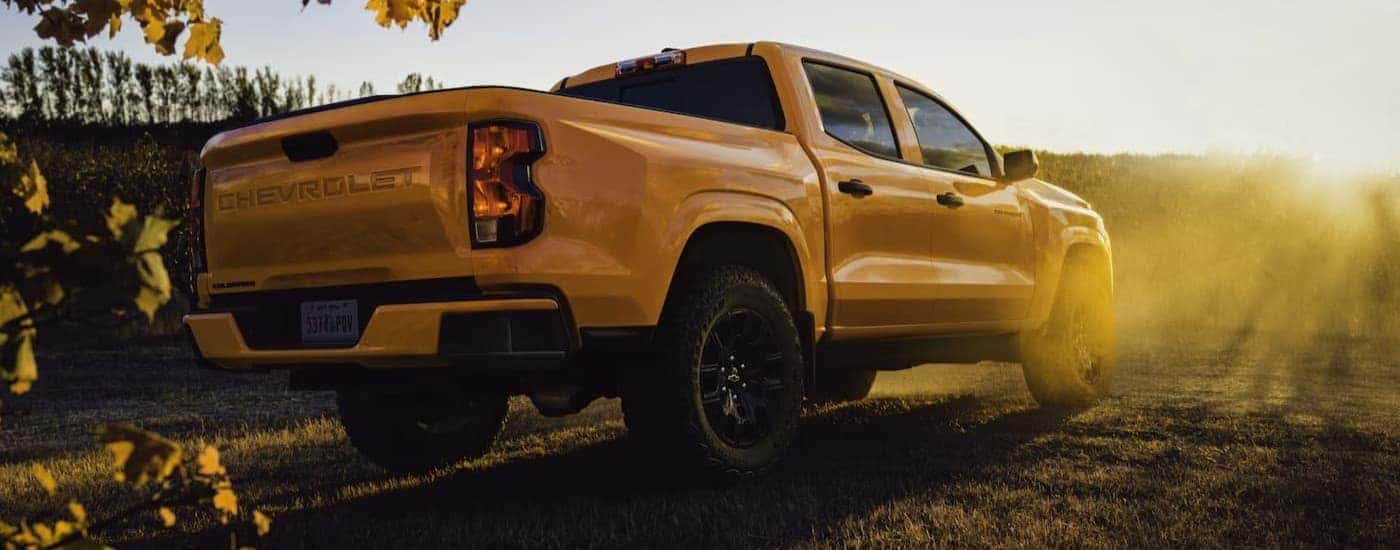
Truck utility goes far beyond towing numbers. Real-world practicality matters just as much, especially for buyers planning to use their truck for home improvement projects, outdoor adventures, work equipment, landscaping supplies, or everyday hauling duties. In this area, the Chevy Colorado continues to demonstrate why it feels more like a traditional pickup than the Honda Ridgeline.
Cargo Volume and Storage
At first glance, the Ridgeline’s bed length may appear competitive. Honda equips the Ridgeline with a 5.3-foot bed, which is slightly longer than the Colorado’s 5.2-foot bed. However, actual cargo volume tells a very different story.
The 2026 Colorado offers 41.9 cu.ft. of cargo volume, substantially more than the Ridgeline’s 33.9 cu.ft. That difference becomes extremely important when loading larger equipment, bulkier cargo, camping supplies, construction materials, or recreational gear. The Colorado’s bed simply provides more usable space overall.
Honda attempts to offset some of that disadvantage with its available 7.3 cu.ft. in-bed trunk, which adds additional secure storage underneath the Ridgeline’s bed floor. That feature is undeniably clever and useful for smaller items, valuables, or gear you’d rather keep protected from the elements. However, even when combined with the Ridgeline’s bed space, that storage area still doesn’t fully match the Colorado’s overall cargo capability and utility-focused design.
Practical Features
The Colorado ultimately feels more optimized for buyers who plan to regularly use their truck bed for larger, heavier, or more demanding loads. Its layout feels more work-ready and adventure-ready overall, particularly for buyers transporting dirt bikes, kayaks, building supplies, coolers, camping gear, or towing accessories.
Chevy also complements the Colorado’s bed with practical utility features that help maximize usability during real-world ownership. Tie-down points, available storage solutions, and versatile bed functionality all contribute to the truck’s more capable personality.
The difference between these trucks largely comes down to philosophy. The Ridgeline prioritizes convenience and comfort first, while the Colorado prioritizes truck functionality and versatility. Neither approach is necessarily wrong, but they appeal to different types of buyers.
For shoppers who want maximum practicality from a midsize pickup, the Colorado simply feels better suited to tougher hauling demands and more adventurous lifestyles. It offers the kind of utility many buyers still expect when purchasing a truck instead of an SUV.

The 2026 Chevy Colorado Comes Out Ahead
The 2026 Honda Ridgeline remains a comfortable and refined midsize truck that works well for buyers primarily focused on smooth daily driving and crossover-like manners. Its user-friendly interior and clever storage features help it stand apart from traditional pickups in certain ways.
However, the 2026 Chevy Colorado ultimately delivers the stronger overall package for buyers who want true truck capability. Its 310 hp TurboMax engine and massive 430 lb-ft of torque provide noticeably stronger performance, while its higher towing and payload capacities make it more versatile for demanding work and recreation alike. The Colorado also offers a larger standard 11.3-inch infotainment screen, more usable cargo volume, and a more rugged overall personality that aligns closely with what many truck buyers actually want.
Most importantly, the Colorado feels purpose-built for a wider variety of lifestyles. It can comfortably handle commuting duties during the week while still feeling fully prepared for towing, hauling, off-road exploration, and outdoor adventure on the weekends.
For shoppers looking for a midsize truck that balances modern comfort with genuine truck capability, the Chevy Colorado stands out as the better all-around choice in this matchup. To get behind the wheel of this midsize truck today, visit our dealership, DePaula Chevrolet, view our selection, and speak with our experts.