
Open Today Sales: 8:30 AM-7 PMOpen Today Service: 7 AM-6 PMOpen Today Parts: 7 AM-6 PM

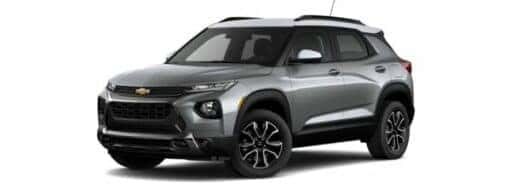
Starting at
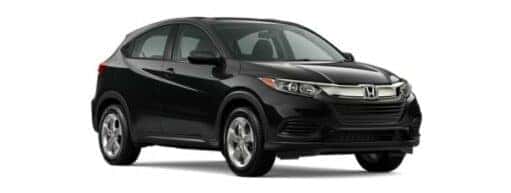
Starting at
| 137-155 | Horsepower (hp) | 141 |
| 31 | Fuel Economy (mpg) | 30 |
| 8 | Screen Size (in) | 7 |
The automotive industry is one that's fueled by competition, innovation, and an unrelenting desire to be the very best. Today, the SUV is reaching unprecedented popularity as the ideal family vehicle that's more consumer-friendly than ever before. Two manufacturers that are constantly attempting to claim their place on top of the food chain and remain there are Chevy and Honda. Both have lineages that date back several decades and have no intention of tarnishing them by diminishing their devotion to quality. With consumers wanting vehicles that are more efficient in terms of fuel consumption and versatility, manufacturers have no choice but to comply with these needs. Today, we'll be placing our attention on two vehicles currently on the market and making a definitive choice as far as which one is superior to the other. It's the 2022 Chevy Trailblazer vs 2022 Honda HR-V. Only one can triumph, so allow us to begin.
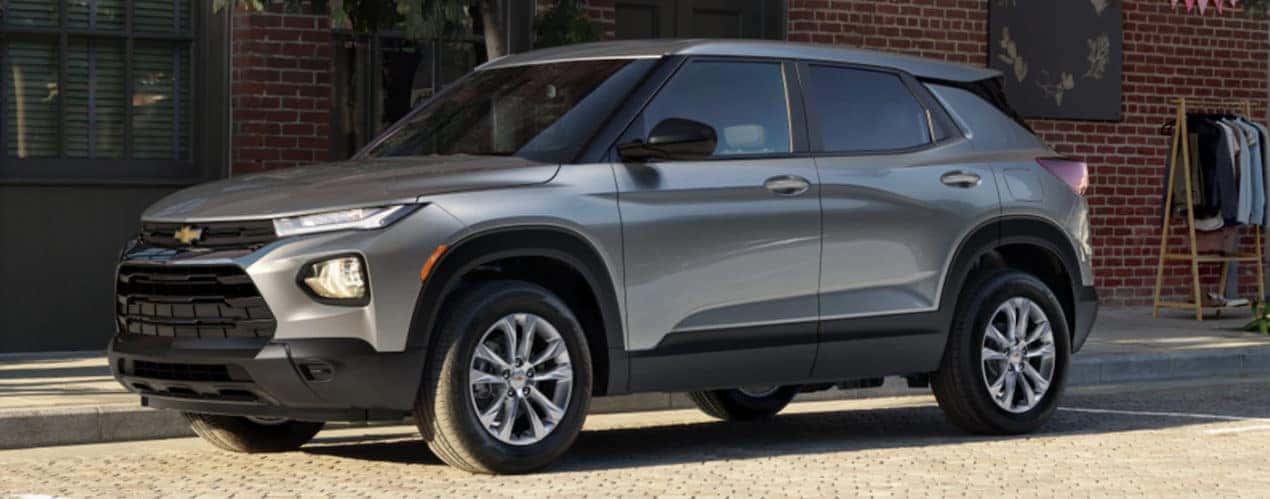
There are many factors that determine a vehicle's cost-effectiveness. While we'll be reviewing each one individually, we'll begin with the most obvious that many people choose to examine first, which is the beginning MSRP. The 2022 Honda HR-V possesses a starting MSRP of $21,870. While this is cheaper than some of their other rivals, such as the Mazda CX-30 and Volkswagen Taos, it is still more expensive than top-selling options such as the Kia Soul and Hyundai Kona. This price is slightly above the average going rate, which is currently around $21,000. The 2022 Chevy Trailblazer underbids its competition from Honda with a starting MSRP of $21,600.[a] While still above the average, it's close enough to the Honda's starting rate to underbid the same offerings from competing manufacturers.
A point of cost-effectiveness with the vehicles that customers look for is saving money at the pump. The price of fuel is rarely consistent, and with increased prices being much more common these days, having a vehicle with conservative fuel consumption means all the difference between saving money and spending too much of it. Fortunately, both of these compact SUVs are fuel-sipping models that don't require spending much at the pump.
The 2022 Honda HR-V has only one engine option, which is a 1.8L 4-cylinder that generates 141 horsepower and 127 lb-ft of torque. With one engine option, the real determining factor in evaluating the HR-V's fuel consumption comes down to its drivetrain. Like many subcompact SUVs, the HR-V comes available in FWD and AWD, and this impacts the vehicle's fuel consumption. Consumers who opt for FWD will have a decent fuel economy of 30 MPG combined, whereas those who select the AWD model will have that number drop to 29 MPG.
Chevy has always built its vehicles with the consumer in mind. To this end, it has abandoned the common four-cylinder engine altogether in favor of equipping the Trailblazer with 1.2L and 1.3L 3-cylinder options. Smaller engines tend to be more efficient in how much fuel they consume, and the Trailblazer is outstanding in this category. When equipped with the standard 1.2L engine and FWD, the 2022 Trailblazer is rated for 30 MPG combined, just like the HR-V. However, the more powerful 1.3L engine does better, getting up to 31 MPG combined. Because of this, we award cost-effectiveness to the Trailblazer for narrowly edging out the HR-V when it comes to both fuel economy and starting price.
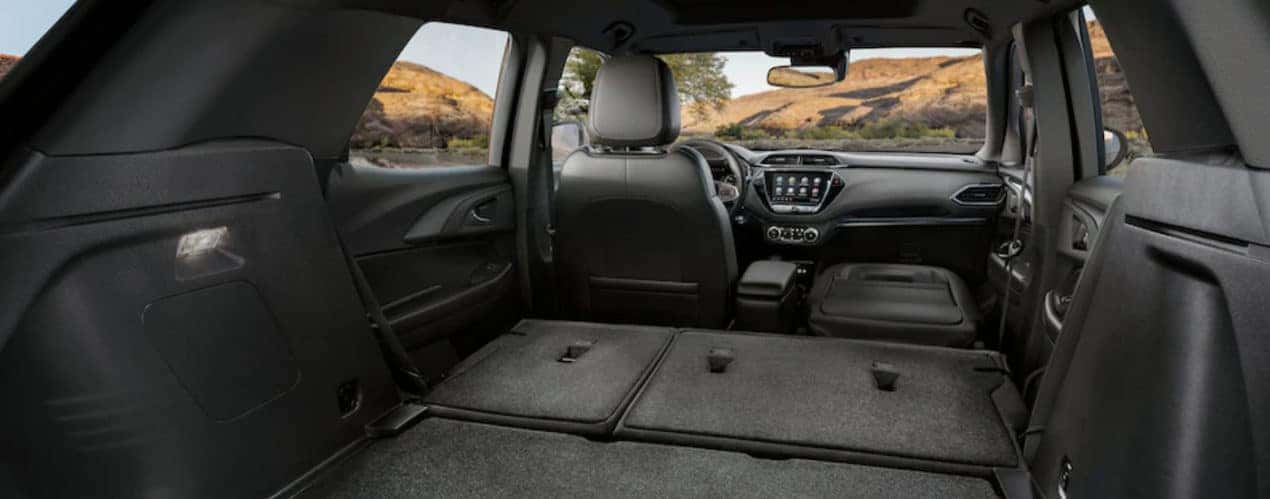
While we may try to be frugal and practical when it comes to the purchases that we make, we also enjoy comfort and amenities when we are on the road. To this end, being comfortable behind the wheel is a legitimate concern. After all, what's the point of saving some pennies at the pump if you can't be comfortable on your commute? Both Chevy and Honda understand this and have certainly taken the time and consideration to craft interiors that have their individual advantages.
While the Honda HR-V certainly possesses a snazzy exterior design, as does most of the fleet, its interior feels very basic and underwhelming. While many of the trim levels feature a 7" infotainment touchscreen that serves as the centerpiece for the interior, the introductory trim has a simplistic 5" LCD display. Even when someone opts to shell out more for a better equipped HR-V, they're still given very little in the ways of style and aesthetic. Unless someone enjoys a look that cries out "bland sedan," there's very little to get excited about. While offering plenty of cargo space and legroom, the HR-V feels stripped down and uninviting.
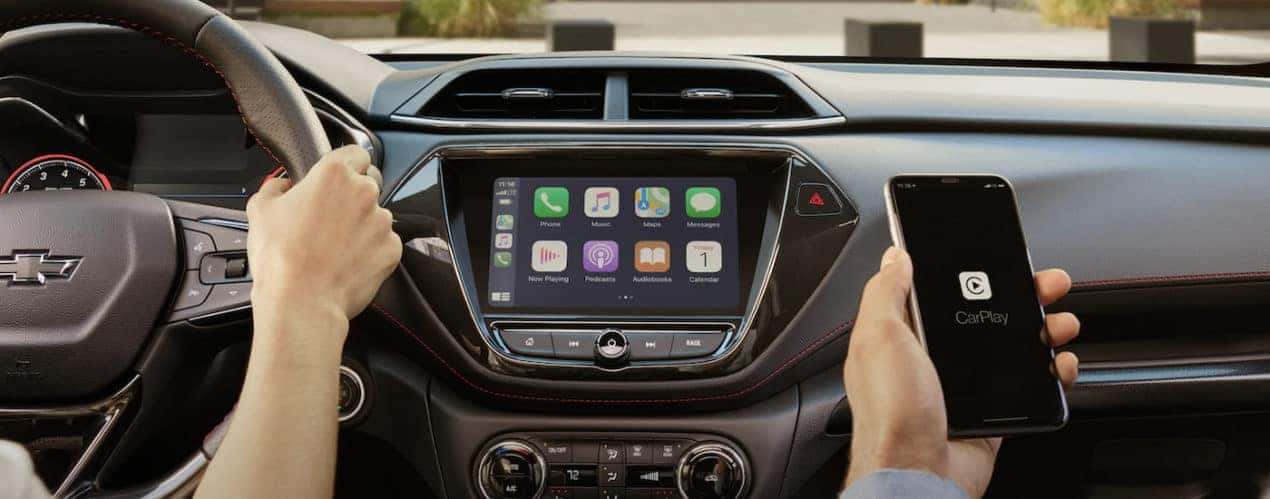
The Chevy Trailblazer's interior may not be quite as impressive as the Camaro-inspired design of the recent Chevy Blazer, but it manages to possess character and distinction that's sadly missing from the HR-V. A standard 7" infotainment screen is the centerpiece of the interior, while an available 8" display screen can spice things up a bit. A standard four-speaker system with available upgrades makes for a commute that distracts the driver from the worries of the world, but certainly not the road ahead.
A high driver seating position allows for greater visibility and is just one more notch on the Trailblazer's belt in terms of an interior that's appreciated for the price it comes at. For even more character, opt for the sporty RS trim or the outdoorsy ACTIV trim and enjoy a variety of unique interior and exterior styling upgrades. As it has done for decades, Chevy knows how to implement comfort just as much as performance and inject just enough style to make even its most inexpensive offerings seem stylish compared to their competitors.
There's absolutely nothing more important than being safe while behind the wheel. Safety is arguably the most important aspect of vehicle ownership. When you examine the various safety features and driving assistance technologies, you may come to the realization that many of them are similar across the whole of the automotive industry. It's no longer a question of which features are offered from the different manufacturers, but which ones are accessible in terms of coming standard. This illustrates a company's willingness to offer more to its customers for a lower cost.
Both the 2022 Honda HR-V and 2022 Chevy Trailblazer received a five-star overall safety rating from the NHTSA in their government-mandated crash testing. Both Honda and Chevy have always placed safety at the forefront for the benefit of their customers. While the results yielded from this testing reaffirm both companies' attention to safety, there's a very stark contrast between the manufacturers and what they have to offer.
The Honda HR-V does have a wide variety of safety features, such as automated emergency braking, adaptive cruise control, and lane departure and keeping assist. However, there's a catch—none come standard. This comes as somewhat of a red flag for the consumer who's putting cost-effectiveness at the forefront of their vehicle search. After all, when did safety start coming with a price tag?
When it comes to offering more without having to upgrade, Chevy has Honda beaten soundly by more than a few country miles. The standard features that Chevy equips the Trailblazer with certainly speak to Chevy's continued dedication to its customers. Some of the highlights from the standard offering include automated emergency braking with front pedestrian braking, lane departure warning, and lane-keep assist. And, of course, the Trailblazer comes with Chevy's Teen Driver program, allowing parents to reinforce the habits necessary for safe driving.
This dedication to making important safety features standard was a major factor in the 2022 Chevy Trailblazer being named an IIHS Safety Top Safety Pick+, the highest award possible from this prestigious third-party safety organization. While the Honda HR-V did nearly as well in crash testing, its lack of standard safety features meant that it failed to receive any awards in its IIHS testing. Chevy once again proves that its safety-oriented approach is consumer-friendly and cost-effective.
The 2022 Chevy Trailblazer is a vehicle that's cost-effective, safe, and, most importantly, family-friendly. When it comes to purchasing a vehicle to maintain your quality of life and allow you to be safe on the road, DePaula Chevrolet is the dealership that drivers trust to provide them with a top-tier selection and incredible service that you won't find anywhere else. Chevy has always placed a great deal of pride in what it has to offer consumers, and as an extension that represents the bowtie brand, we take pride in what we have to offer you. Our commitment to you doesn't end when you sign the paperwork and drive off of our lot, nor should it. We want you to come back and take advantage of our parts and service department to ensure your Chevy stays on the road and allows you to blaze any trails you see fit. Visit DePaula Chevrolet today to find your new Chevy Trailblazer!
*Images, fuel economy, and other stats, may reflect higher trim levels, options, or features that may result in a higher cost from the starting MSRP.
MSRP excludes tax, license, registration, additional options, and possible destination charges. Dealers set own prices.