
Open Today Sales: 8:30 AM-7 PMOpen Today Service: 7 AM-6 PMOpen Today Parts: 7 AM-6 PM

Starting at
Starting at
| 137 | Horsepower (hp) | 158 |
| 162 | Torque (lb-ft) | 138 |
| 29/33 | Fuel Economy (city/hwy MPG) | 26/32 |
Subcompact SUVs can be the perfect vehicle type for someone ready for a bit more room and power than what’s offered by most sedans, but who isn’t ready to go for a full-size or three-row SUV. Subcompact SUVs are easy to handle, offering a higher driving position than sedans and extra room in the cabin and trunk, but they tend to retain a fuel economy similar to that of a sedan and don’t feel like “too much car to handle.” If you’re in the market for one, then there’s a good chance you’ve considered the 2023 Chevy Trailblazer vs 2023 Honda HR-V. These are both admirable choices from reputable manufacturers. At first glance, they can appear rather similar (besides the distinct two-tone style of the Trailblazer).
If your research has narrowed down to these two options, it’s time to get down to the nitty-gritty and see what exactly differentiates them. They’re both, without question, affordable choices from trusted brands with sporty handling and comfortable cabins, but once you spend extended time in a vehicle, it’s the little things you really start to notice. So, let’s take a closer look at the features of these two popular subcompact SUVs to help you make an informed decision.
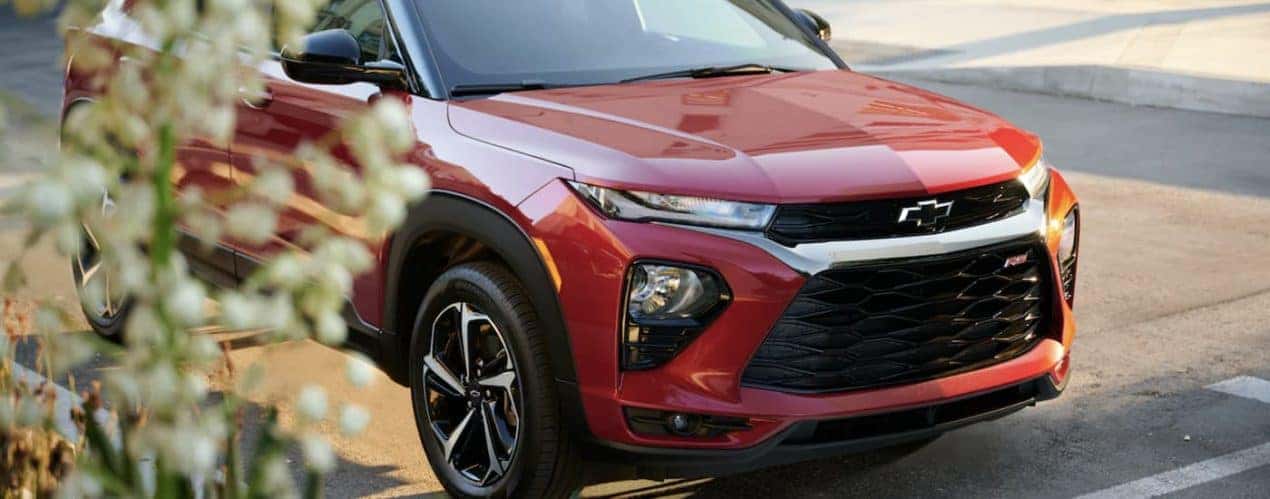
The Chevy Trailblazer is fun to drive, ready for a variety of environments, and offers a high yet comfortable driving position that allows for good visibility without feeling too disconnected from the road. It has two turbocharged engine options: the 1.2-liter EcoTec Tubo and the 1.3-liter EcoTec Turbo. The latter is the way to go if you’re looking for a nice little rush of power in your SUV. It can go from zero to 60 mph in a modest 9.4 seconds. It’s certainly not for speed demons, but it will never feel sluggish, either. You’ll enjoy 155 hp and 174 lb-ft of torque for the 1.3-liter engine and 137 hp for the 1.2-liter option. The HR-V only offers one engine option; a 2.0-liter four-cylinder engine that gets 158 hp and 138 lb-ft of torque. In terms of variety, the Trailblazer wins by offering a few options.
All-wheel drive is available on the 2023 Trailblazer, so it can live up to its name of helping you explore some rougher, off-the-beaten-path terrain. When you do choose AWD, you’ll move away from the standard continuously variable transmission to a responsive nine-speed automatic transmission. It’s no off-road vehicle, but it gives you versatility and command in many environments, and with its responsive steering, you’ll feel in control when the roads get a little out of control. It takes curves with ease, too, and accelerates steadily; nothing mind-blowing but also not underwhelming. Like the Trailblazer, the HR-V also offers AWD, so in terms of handling more challenging terrain and inclement weather, both SUVs have you covered.
As for fuel economy, the 2023 Trailblazer shines. With an impressive 29 MPG in the city and 33 MPG on the highway, it won’t leave previous sedan owners missing the efficiency of their smaller vehicles. The maximum fuel economy is achieved on the front-wheel drive models, but it only marginally drops when you choose an all-wheel drive, so fuel economy is no reason to shy away from AWD if that’s what you’re after. This subcompact SUV lets you enjoy less time spent at gas pumps, so you’ll save up front on the low MSRP of this vehicle and later with fewer fuel stops. Now, let’s look at the Honda HR-V, which achieves a fuel economy of 26 MPG in the city and 32 MPG on the highway. It doesn't quite reach the Trailblazer's numbers, which is worth noting. When it comes to engine power and fuel economy, the Trailblazer edges out the HR-V with its impressive stats.
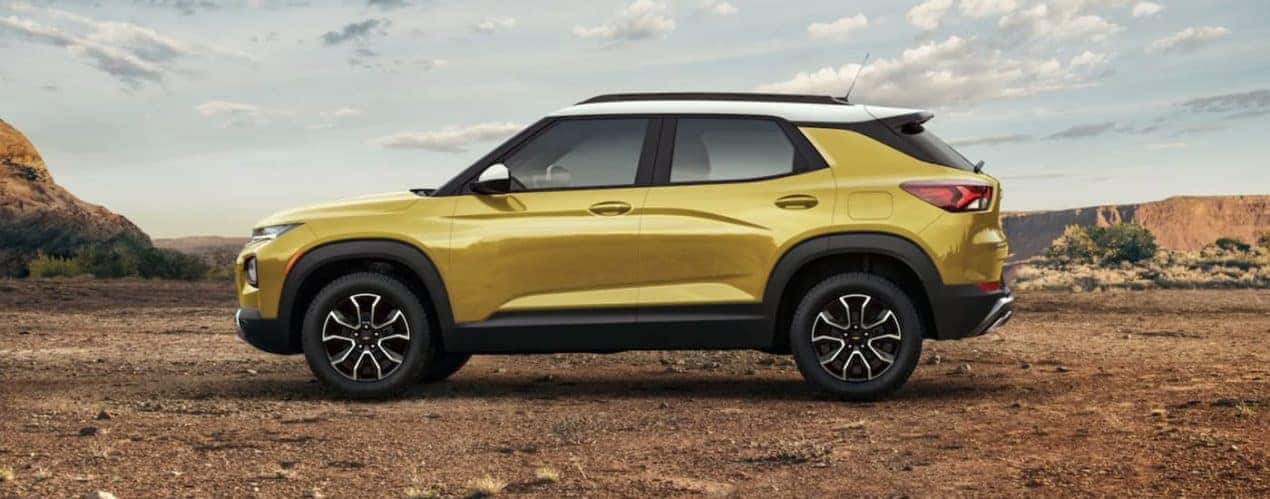
Safety is one of the most, if not the most, important features in any vehicle. If you happen to be upgrading from a sedan to a subcompact SUV, you’ll want driver-assist features that help you transition to handling a larger vehicle. The Trailblazer gets the current Chevy Safety Assist suite of features, which includes forward collision alert and automatic emergency braking that will notify when a potential collision is imminent and activate the brakes if you fail to do so in time. Front pedestrian braking is part of the package, too, while rear park assist can be added along with an HD surround vision camera.
Making lane changes more safely and navigating busy highways feels safer in the Trailblazer, thanks to lane departure warning and lane keep assist, which let you know when you’re drifting and gently guide you back into your lane. Chevy additionally has its Teen Driver technology, which lets parents set limits on certain functions when a teen is behind the wheel (and provides teen driver reports). IntelliBeam auto high beams automatically turn on in low light settings and off when oncoming traffic is detected.
The 2023 Honda HR-V has most of what the Trailblazer has, but not all. The collision mitigation braking system and lane keeping assist system are in place, and both vehicles also have cruise control and distance control systems. However, the HR-V, unfortunately, does not have rear-assist systems like rear pedestrian control or an HD rear camera like the Trailblazer does. Since backing up is one of the trickier maneuvers with drivers, this is a big setback for the HR-V. It also lacks any teen driver function, so parents of teens will just have to take their young adolescent’s word that they were safe on the road.
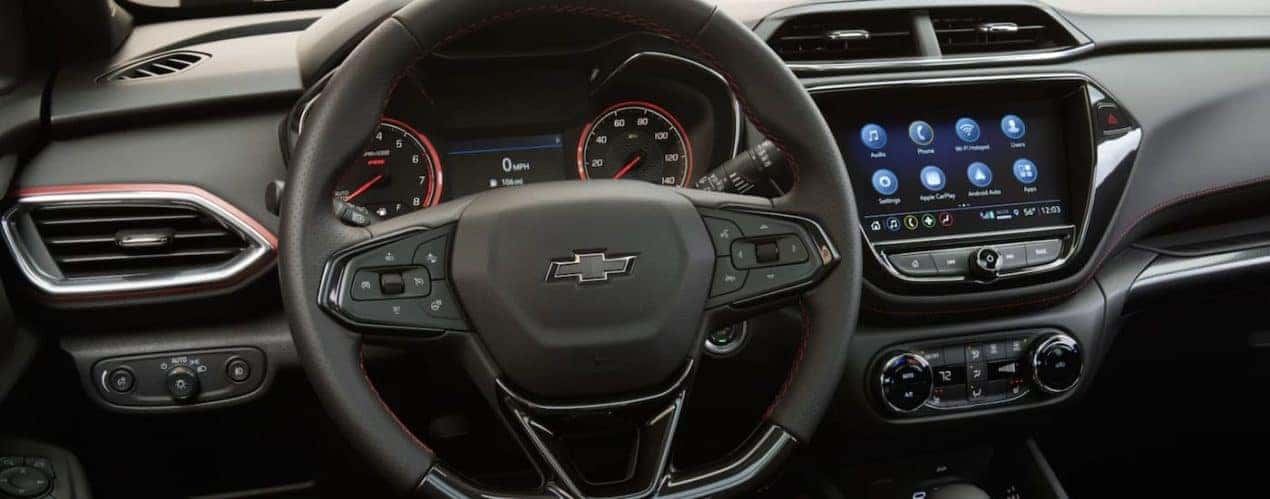
On long drives, things like cargo, comfort, and infotainment make all the difference, and both of these vehicles do well in these categories. The Chevy Trailblazer has a 7-inch infotainment screen, with the option to get an 8-inch on higher trims, and its base-level speaker system starts at six speakers. Opt for a higher trim, and you get a premium 7-speaker Bose sound system. Upper trims also get the Chevy Infotainment 3 Plus system, which has built-in navigation and advanced voice controls.
As for comfort, heated seats and a steering wheel come standard or available depending on which trim you opt for. Furthermore, USB ports and wireless charging are available or standard on certain trims. The Chevy Trailblazer has not only rear seats that fold for more cargo but also a front passenger seat that folds flat for even more cargo space. Plus, it has a 2-level load floor for easy loading of heavy items.
With the HR-V, it also has a modest infotainment screen similar in size to that of the Trailblazer. Luxury features such as heated components and wireless charging are available on upper trims. Its base trim speaker system only gets four speakers, so it will not provide nearly as good of sound as the base-level Trailblazer; however, it goes up to eight speakers on top trims. The rear seats do fold flat, but this year, Honda abandoned their popular flip-down Magic Seat in the back that made a nice low cargo floor. Drivers were sad to see that go.
The HR-V and Trailblazer are nearly head-to-head on infotainment features, except for the difference in base-level sound systems. Plus, the HR-V doesn’t quite have anything like the Chevy Infotainment 3 Plus system for those craving more advanced tech features. Both vehicles enjoy nice interior materials, with leather trimming only available to higher-end trims for both models. Overall, the Trailblazer has an advantage over the HR-V with its entertainment features, such as its infotainment system and standard available speakers, along with its storage features that make packing up the SUV a breeze.
DePaula Chevrolet is the premier place to shop for new and used Chevrolet models in and around Albany, New York. We constantly update our stock to have the newest, most exciting models and work hard to offer competitive pricing. With dealership discounts, regular specials on new and used cars, and a great trade-in program, we make it easy to get behind the car of a Chevy you love at a price you love just as much. Whether you’re looking for a new or used Chevy, we have an extensive selection of the most beloved models from throughout the generations. Our sales team is well-versed in the features of each one, so come in and let us help you find the perfect Chevy for your unique driving needs.
Once you’ve picked one out, our highly experienced finance team will walk you through your lease and loan options and get you on a payment plan that works for your budget. With excellent relationships with the top lenders in the area, we make it easy to get approved for the car of your dreams. And once the keys have been handed over and you drive off our lot, our service center is here for any maintenance or repairs you may need during the ownership of your vehicle.
At every step of the way, from picking out a car to test driving it to finance, we make car shopping easy and fun. We hope you’ll visit us soon and enjoy a test drive of one of our many Chevy models, including the fantastic 2023 Chevy Trailblazer.
*Images, fuel economy, and other stats, may reflect higher trim levels, options, or features that may result in a higher cost from the starting MSRP.
MSRP excludes tax, license, registration, additional options, and possible destination charges. Dealers set own prices.