
Open Today Sales: 8:30 AM-7 PMOpen Today Service: 7 AM-6 PMOpen Today Parts: 7 AM-6 PM

Starting at
Starting at
| Est. 510-664 | Horsepower (hp) | 426-563 |
| Est. 10,000 | Towing (lbs) | 10,000 |
| Est. 400 | Range (mi) est | 300 |
Ford threw down the gauntlet by announcing the Ford F-150 Lightning, an electric-powered rendition of its light-duty pickup truck. GM answered with the Chevy Silverado EV, which counters the F-150 Lightning at almost every turn in terms of range, performance, and capabilities. There are even a few ways that the Chevy Silverado EV completely outclasses the F-150 Lightning, with utilitarian functions that weren't even an afterthought for Ford. This comparison between the 2024 Chevy Silverado EV vs 2022 Ford F-150 Lightning will break down the differences between the two full-size electric trucks and how they're elevating the pickup game.
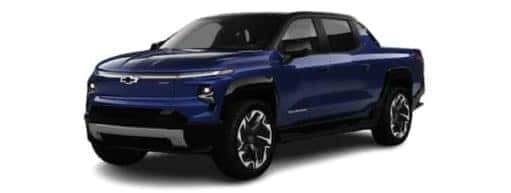
The 2024 Chevy Silverado EV comes in several different trims, including the WT (or Work Truck), the Trail Boss, and the RST. The WT is the entry-level trim that offers you everything you need to get things done, from towing and hauling to utilizing the Silverado as a work-site power source. For additional range and luxury, the RST provides a lot more functionality and premium capabilities. For off-road purposes, a Chevy Silverado EV Trail Boss comes equipped with everything necessary to tackle off-road ventures.
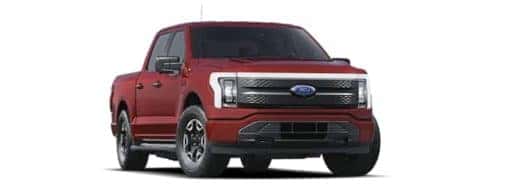
The Ford F-150 Lightning is also available across several trims, including the base Pro, the XLT, the Lariat, and the Platinum. The base trims offer all of the basic features, functionality, safety, and infotainment you would expect from the F-150, only powered entirely by a battery pack. You gain additional power output and luxury features with the Lariat and Platinum trims. Both the Silverado EV and F-150 Lightning are available as full-time four-wheel drive trucks, offering the maximum capabilities within their market segment.

Both the 2024 Chevy Silverado EV and 2022 Ford F-150 Lightning have multiple powertrain setups depending on the trim. They are powered by a battery pack with two electric motors. However, the batteries are distinctly different from one another. For instance, the F-150 Lightning is powered by a standard lithium-ion battery pack and two permanent magnet electric motors.
The standard F-150 Lightning battery pack nets drivers up to 230 miles of range, while the extended battery pack can allow for up to 300 miles worth of travel, a significant step behind the Silverado EV's capabilities. Ford's standard battery can generate up to 426 horsepower and 775 pound-feet of torque through the two electric motors. The extended range battery can deliver up to 563 horsepower and 775 pound-feet of torque through an always-on four-wheel drive system.
The 2024 Chevy Silverado EV, however, brings a different flavor to the table, being powered by the Ultium battery system. The Ultium battery pack consists of 24-modules that deliver power to an e4WD system, which is the equivalent of a four-wheel drive system, only it's powered by electric motors. The e4WD system is complemented with the highly proficient four-wheel turn system, so not only do all four wheels receive power but can also turn, thus reducing the overall turning radius and increasing maneuverability for the full-size truck, something the F-150 Lightning lacks.
The Silverado EV WT trim provides 510 horsepower and 615-pound-feet of torque. However, if you want maximum performance, the Silverado EV can deliver up to 664 horsepower and 780 pound-feet of torque with the RST trim by utilizing what's called the Wide Open Watts Mode for peak performance. This enables the Silverado EV to achieve an impressive 0 to 60 miles per hour in just 4.5-seconds. The Silverado EV also allows for a maximum range of up to 400 miles, which is 100 miles more than what is available with the F-150 Lightning.
The comparison between the 2024 Chevy Silverado EV vs 2022 F-150 Lightning lights up on the design front, literally. Both trucks are clear departures from their combustion counterparts. Both feature LEDs that run the outer edge of the fascia, connecting the headlights, and closed grilles. The F-150 Lightning maintains a more conservative approach to modifying the classic full-size look, with a closed-off grille and the blue oval logo situated in the center of the black panel design.
The Silverado EV, however, takes a decidedly more aggressive approach to its new look, with a more pronounced hood design featuring menacing curves and a lot of angular accents on the front fascia that give the Silverado EV a much bolder look. The design change for the Silverado EV, however, isn't just about looks but also about utility.
In the front, the Silverado EV features an eTrunk for water-tight storage, in addition to the rear bed. Speaking of the rear, the all-new modular midgate helps expand the storage capacity and hauling space of the Silverado EV. The Multi-Flex Midgate enables drivers to raise the divider between the cab and bed, accommodating items up to 9 feet long with the tailgate up. The Multi-Flex Midgate also works in conjunction with the returning and improved Multi-Flex Tailgate, which can help further maximize the storage space of the standard 5-foot 11-inch rear bed.
The F-150 Lightning, meanwhile, only offers a 5-foot 7-inch bed to work with and no Multi-Flex Midgate like its Chevy rival. It does come with a power frunk, featuring 14.1 cubic feet of water-tight storage space, perfect for storing up to 400 pounds worth of cargo. And speaking of cargo, the F-150 Lightning can carry up to 2,000 pounds worth of cargo and has an initial towing capacity of 7,700 pounds. However, with the extended range battery installed, the F-150 Lightning can manage up to 10,000 pounds worth of towing.
The Silverado EV, meanwhile, can haul up to 1,300 pounds and has a maximum trailering rating of up to 10,000 pounds. Unlike the F-150 Lightning, however, the Silverado EV still offers up to 8,000 pounds of towing capacity in its base configuration. This enables the Silverado EV to be a bit more useful in its more affordable configuration.
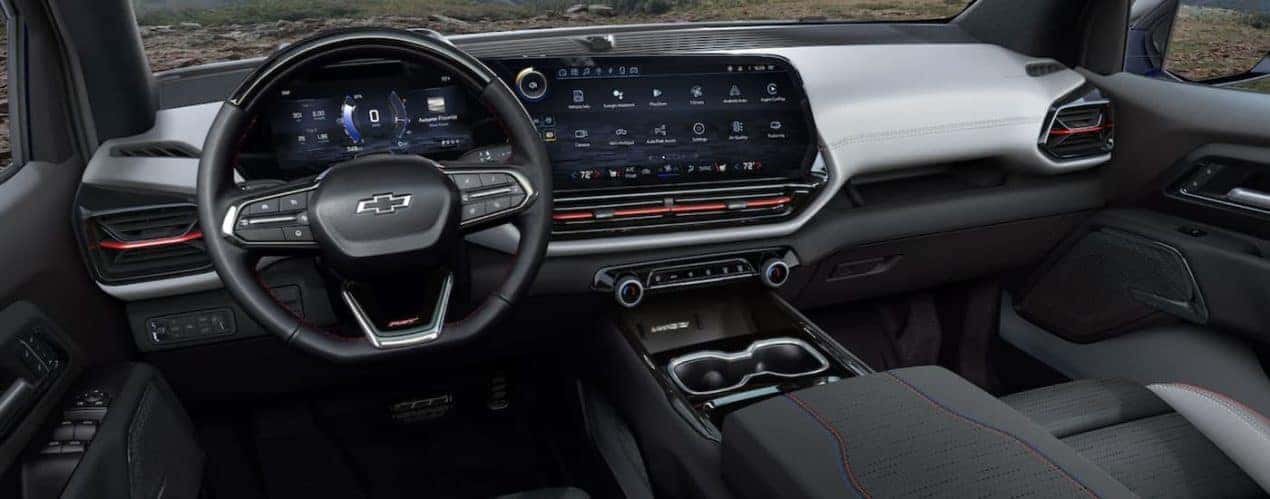
Both vehicles feature a litany of technology from performance to safety to comfort. The F-150 Lightning features the Ford Co-Pilot360 2.0 safety and technology suite, keeping all five passengers safe during travel. The available BlueCruise hands-free autonomous driving feature is enabled to trek across more than 100,000 miles worth of roads in North America. A 12-inch driver display cluster is accompanied by the Ford SYNC 4A infotainment system that offers 15.5-inches of touchscreen real estate and features wireless access to smart devices, along with Apple CarPlay and Android Auto integration.
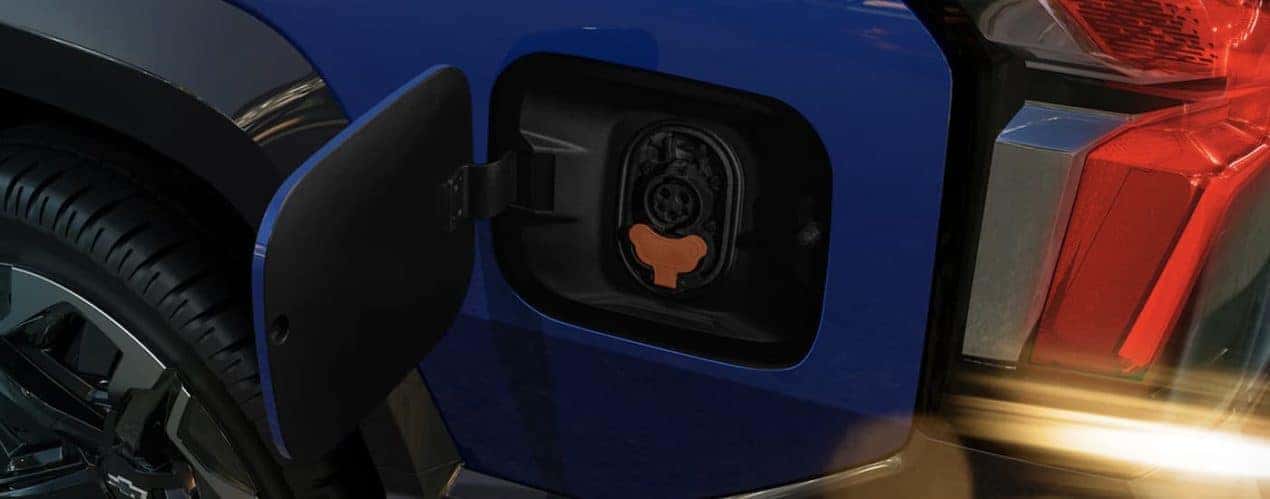
The F-150 Lightning features the ability to power other devices, electronics, and even homes with up to 9.6 kilowatts of power from the Ford Intelligent Backup Power system. You can also make use of multiple charging options. This includes the 32-amp Ford Mobile Charger, the 48-amp Ford Charge Station, an 80-amp Charge Station Pro, and the 150-kilowatt DC fast charging option, which can charge the Lightning from 15% to 80% in just 41 minutes.
The Silverado EV swings back with an 11-inch driver information digital display cluster, accompanied by a massive 17-inch diagonal LCD freeform touchscreen. All of the standard smart device integration is available, including wireless Apple CarPlay and Android Auto, as well as voice-activated navigation and app access via the standard implementation of the Google Assistant. In fact, if you enter into a Silverado EV with an enabled device, the vehicle will automatically turn on using the hands-free start feature.
The Silverado EV also counters the F-150 Lightning's BlueCruise with Chevy's own trailering-enabled Super Cruise, which allows for autonomous, hands-free driving on more than 200,000 miles worth of roads across the U.S. and Canada. With active and passive safety features, and a software suite powered by Linux using in-house proprietary features, the Silverado EV brings a whole new level of originality and unique driver-driven features to the pickup segment.
Both the Ford F-150 Lightning and Silverado EV feature over-the-air updates for performance, information, and firmware support, keeping drivers at the cutting edge of the electric vehicle advancements. However, the simple fact that the Silverado comes with a larger infotainment cluster, more Super Cruise-enabled roads to travel, and ten outlets with up to 10.2 kilowatts of on-board electricity to power other devices, as well multiple charging options with access of up to 100,000 different charge stations, the Silverado EV clearly takes the edge over the F-150 Lightning in the technology department.

DePaula Chevrolet is your premier dealership for all things Chevy. Our dedication to quality and automotive excellence stands head and shoulders above the rest, making us one of the most trusted and best-reviewed Chevy dealerships in Albany, New York. At DePaula, you are guaranteed excellent service with unparalleled quality, an amazing inventory of new and used vehicles, and unrivaled repair and maintenance handled by certified technicians.
Never skip a beat in your day worrying about finances and auto-loans. Our finance department will ensure that you will be able to get the right kind of loan for your vehicle with no problems. Trade-in your current vehicle or use our payment calculator to find out what sort of new or used Chevy fits best into your budget. Leasing? Check out our vehicle exchange program to see how you can trade up for something better, or if you want the best used vehicles on the market, you can check out our curated inventory of Certified Pre-Owned (CPO) models that come with the best warranties available for a Chevy.
Even if you don't think you can afford another vehicle, our selection of under-$15,000 vehicles will be sure to entice even those on the strictest of budgets. Our specials and discounts can also help you find the perfect car, truck, EV, or SUV that fits your lifestyle and needs. Call, chat, or talk to our team today to find out how you can get behind the wheel of a new or used Chevy.
*Images, fuel economy, and other stats, may reflect higher trim levels, options, or features that may result in a higher cost from the starting MSRP.
MSRP excludes tax, license, registration, additional options, and possible destination charges. Dealers set own prices.