


Chevy vs Tesla: The EV Battle You Didn’t Expect
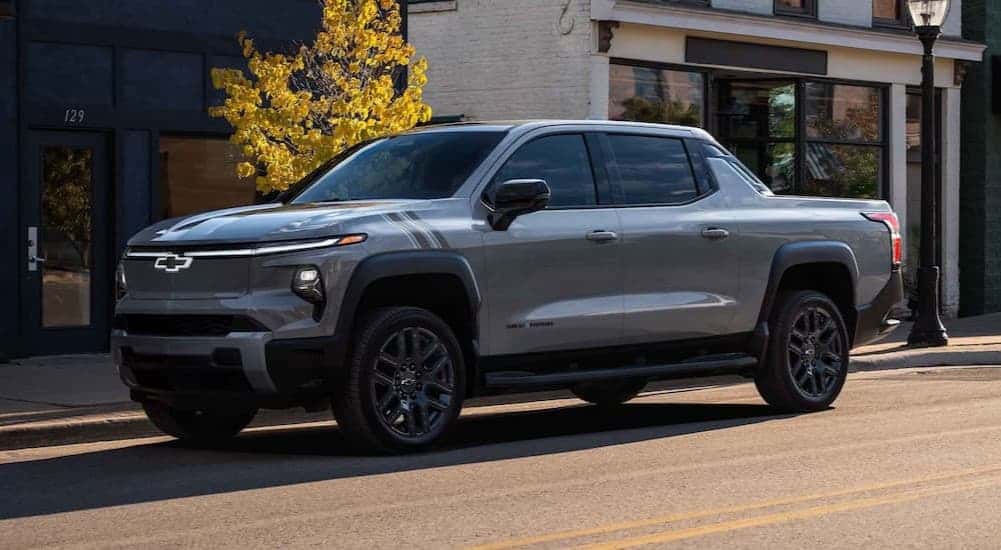
The electric vehicle revolution has gained momentum over the past decade, with an increasing number of drivers exploring their options and shopping for EVs for sale. Many of those searches start with Tesla, a name that’s long been seen as the pioneer of the EV market. But does Tesla still maintain its edge? Chevrolet argues otherwise.
A household American brand for over a century, Chevrolet has quietly built a strong lineup of EVs that challenge Tesla’s dominance. Chevrolet leans into its legacy and remains true to its original mission of making long-lasting and reliable automobiles for every purse and purpose.
How does that translate in the EV realm? Why are more drivers turning to Chevrolet for EVs? It’s time to find out.
#1 – Accessibility
Tesla has built its brand around a direct-to-consumer model, which sounds appealing because it’s not the traditional dealership experience. It eliminates the stress of dealing with fast-talking salespeople in a high-pressure environment, which customers are tired of. Yet Tesla misses something incredibly valuable and essential.
Buying a vehicle is an investment, and customers deserve to confidently make that investment. For many, that confidence stems from working with a dealership they can trust. A dealership that’s accessible and, in our case, prioritizes relationships over sales, commissions, and quotas. Tesla is inaccessible in this sense, limiting their availability to customers.
This personal connection gives dealerships like ours an advantage. Yet, the need for accessibility doesn’t stop there. Most customers browse their options online before visiting a dealership to see the various trims, packages, and features firsthand. Tesla ignores this need, adding inconvenience and uncertainty because their direct-to-consumer model eliminates this opportunity.
You deserve more, Chevrolet agrees, and so do we.
#2 – Affordability and Value
Another compelling reason that drivers are turning to Chevrolet EVs is cost. Tesla capitalizes on its exclusivity, forcing drivers to pay a premium without necessarily getting more. Tesla owners, obviously, aren’t receiving dealership support, but the disadvantages don’t end there.
The Model 3 is one of the most affordable options in the Tesla lineup. For example, a rear-wheel drive Model 3 with a long-range battery starts around $42,000 before tax incentives. Its features are minimal, reflecting Tesla’s design approach and pricing strategy. How? You’ll have to spend significantly more on upgrades, like $8,000 to equip the Model 3 with Tesla’s supervised Full Self-Driving feature. By then, you’re driving a $50,000 base trim.
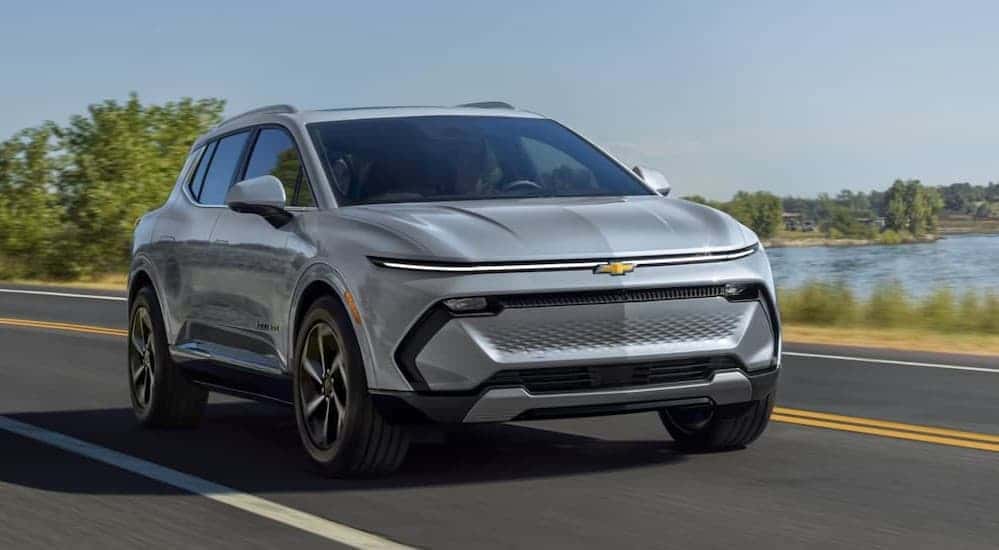
Chevrolet takes a vastly different approach across its EV lineup, which includes models like the Equinox, Blazer, and Silverado. The 2025 Equinox EV starts at $33,600 and is packed with features that offer tangible value. For example, the entry-level LT1 offers a 319-mile EPA-estimated driving range with the option to add all-wheel drive. Chevrolet equips the 2025 Equinox EV LT1 with over 15 standard safety and driver-assist features, 11.5 kW onboard charging, adaptive cruise control, and a 17.7-inch center touchscreen with seamless smartphone integration, navigational tools, in-vehicle apps, and more.
You deserve to see your money at work in an EV, with Chevrolet respecting your investment by keeping its electric vehicles affordable and feature-rich.
#3 – Long-Term Support
Tesla’s direct-to-consumer model offers a unique car-buying experience, but it discounts the importance of providing long-term support. Who will you rely on when your Tesla needs routine service or repairs?
Tesla owners often face long appointment wait times due to the scarcity of service centers, particularly in smaller cities and rural areas. Moreover, repairs are costly because, just as Tesla forces drivers to pay a premium when purchasing a vehicle, they demand the same to maintain it and keep it in peak condition.
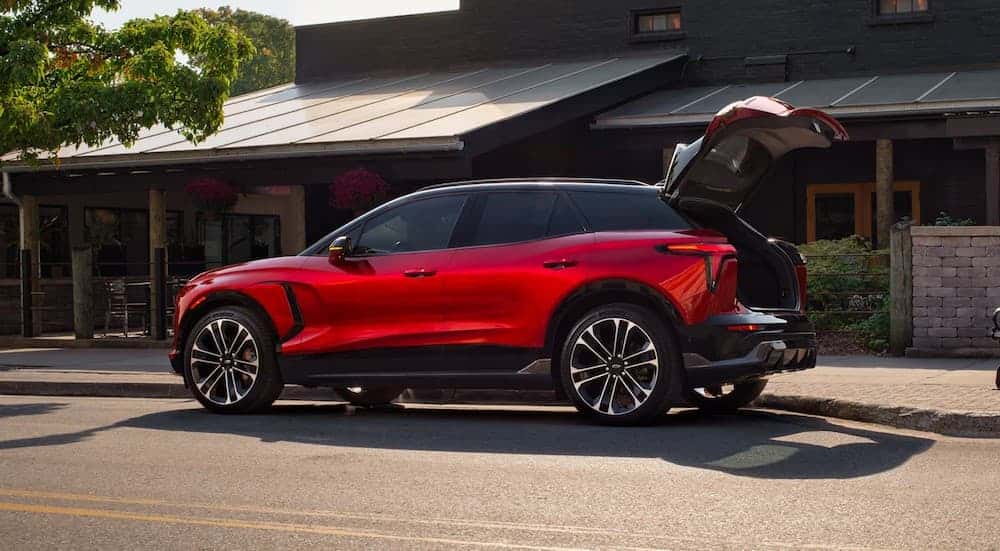
By contrast, Chevrolet has an extensive network of trusted dealerships and state-of-the-art service centers like ours. Whether you own a Chevrolet EV like the Blazer, Silverado, or Equinox, you can trust our dealership and thousands of others nationwide to handle all your maintenance, warranty work, or unexpected repairs. This means less waiting, less stress, and more confidence knowing that certified technicians are ready to help wherever you are.
The convenience of Chevrolet’s dealer network is a significant advantage, alleviating concerns for many EV newcomers who value having an automotive partner they can trust.
#4 – Reliability and Reputation
Tesla may have popularized EVs, but the brand has faced many quality issues. Reports of inconsistent build quality and malfunctions have become more common, leading to rising concern that Tesla is cutting corners or lowering its production standards. While Tesla works to alleviate these concerns, consumers are well aware of the issues and the added risk associated with purchasing a new model.
Chevrolet is an American automotive pioneer with over a century of experience shaping the global landscape and transforming how we travel with reliable, long-lasting vehicles. The brand’s long tenure in the industry is incredibly significant, showcasing Chevrolet’s ability to anticipate, recognize, and respond to drivers’ ever-evolving needs.
Customers know that every Chevrolet, from powerhouses like the Corvette to road warriors like the Silverado EV, is backed by decades of engineering expertise. Moreover, Chevrolet owners appreciate that any issue will be handled efficiently and effectively through the brand’s established and readily available dealer network.
#5 – Familiarity and Practicality
Tesla models are instantly recognizable by their bold and sleek silhouettes, with that theme continuing inside. Tesla’s futuristic interiors are minimalistic, heavily influenced by expansive digital displays that replace traditional buttons, gauges, and tactile controls. While the aesthetics are modern, basic tasks have a steep learning curve because they require navigating a touchscreen menu rather than simply turning a knob or pressing a button.
While Tesla’s futuristic interiors have particular appeal, Chevrolet goes above and beyond to integrate modern details and features with what drivers know. For example, Chevrolet EVs, such as the Blazer, Equinox, and Silverado EV, feature expansive digital displays and intuitive infotainment systems that offer seamless smartphone integration via Apple CarPlay, Android Auto, and Google Built-in. Yet, there are also physical controls in a comfortable and familiar layout.
Chevrolet EVs are also more practical and designed for real-world conditions. How so? Tesla’s futuristic design theory might turn heads, but how does that translate to keeping you comfortable and engaged behind the wheel when you’re running errands or traveling with kids? From cargo space and plush seating to intuitive controls and features, Chevrolet EVs focus on what drivers use and need daily.
This approach resonates with people who want an EV that’s not merely a status symbol, but a reliable, cost-effective, and versatile vehicle that adapts to and complements their everyday life.
#6 – Flexibility at Home and On the Road
Tesla is known for its Supercharger network, an expanding network of 70,000 global charging stations. The Supercharger network was previously limited to Tesla models, reflecting the brand’s efforts to capitalize on the appeal of exclusivity. Thankfully, Chevrolet takes a vastly different approach.
Chevrolet’s collaboration with multiple providers gives owners access to over 250,000 public charging stations in the United States and Canada. While Chevrolet EVs are compatible with Tesla Superchargers, there are far more opportunities to recharge with providers like EVgo, ChargePoint, EVGateway, EVConnect, Francis Energy, EVPassport, and more.
Chevrolet EV drivers benefit from this flexibility because they’re not limited to one charging network and the associated stress of finding compatible stations or investing in another charging connector.
The Big Picture
Tesla deserves credit for bringing EVs into the mainstream. Still, the market has matured, with automakers like Chevrolet leading the charge by making EVs practical, affordable, and accessible to everyday drivers. With affordability, broader service support, proven reliability, and models designed for the real world, Chevrolet EVs offer far more appeal and value than their Tesla rivals.


0 comment(s) so far on Chevy vs Tesla: The EV Battle You Didn’t Expect