

Five Ways the New Chevy Traverse Tops the Honda Pilot
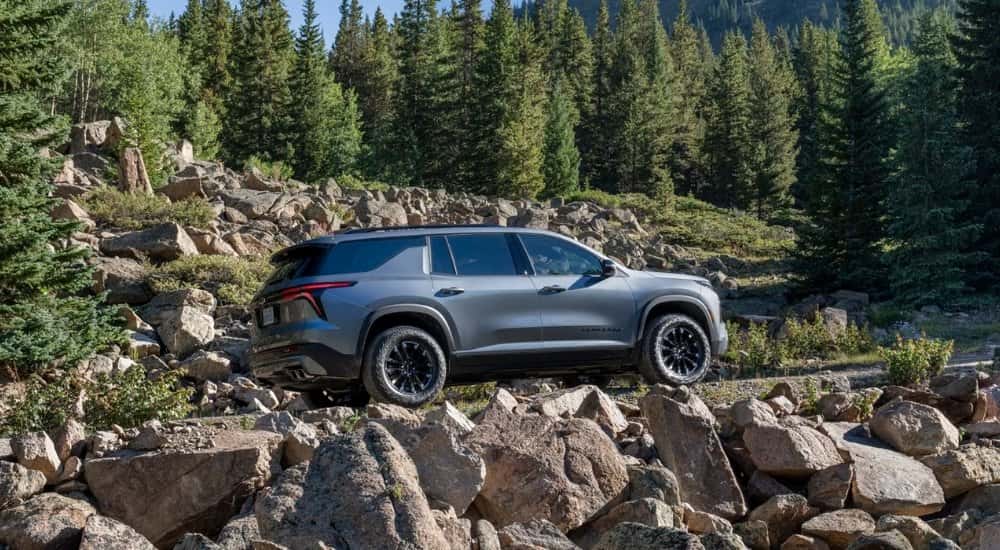
The Chevy Traverse has long been one of the most enticing options in the three-row segment, and it’s improving with every passing year. The current third-generation model has quickly risen through the ranks to post the segment’s best sales, with Chevy moving nearly 150,000 units in 2026 alone. This success can largely be credited to the SUV’s clever combination of cutting-edge tech, class-leading cargo space, and a potent powertrain designed to handle some of the toughest tasks the road has to offer. Throw in the Chevy’s family-focused design, advanced hands-free driving system, and expansive infotainment display, and it’s difficult to imagine a better three-row model.
That hasn’t stopped Honda from trying with its own Pilot crossover. Honda’s largest SUV keeps pace with the Traverse in a few areas, but often finds itself bringing up the rear. Let’s see how the newest models fare in the three-row title fight that is the 2026 Chevy Traverse vs 2026 Honda Pilot.
Performance and Efficiency
Unlike much of the crossover segment, many of the market’s three-row models are limited to a single engine option. That might seem like a bit of a limiting factor in an industry where customization is king, but Chevy has played it safe by equipping the 2026 Traverse with an impressive powertrain that leaves little room for improvement. Pop the hood, and you’ll be met with a 2.5L engine that leverages a turbocharger to provide a lot more muscle than your average I-4 design. With 328 hp to its name, the Traverse bests every base engine in the three-row segment outside of its GM cousins, the GMC Acadia and Buick Enclave. The 2.5L engine produces more torque than all but the Mazda CX-90, which has a noticeable impact on the SUV’s towing ability.
The Honda Pilot also comes with a single engine for the 2026 model year. While it provides more than enough power to push the three-row SUV down the road, the raw stats are a bit underwhelming. The crossover’s 3.5L V6 skips the turbocharger, and unfortunately, it shows in the Pilot’s 285 hp and significantly less torque.
The Pilot’s relative lack of power would be a little easier to justify if the SUV were among the more eco-conscious models, but Honda’s three-row model only manages an EPA-estimated 22 MPG combined and as low as 21 MPG combined when opting for the AWD version. The Traverse logs the same fuel economy but delivers significantly more power along with a much more engaging experience.
Cargo Space
Cargo space is the biggest selling point for any three-row SUV. A roomy ride can drastically simplify even the busiest week, while a cramped crossover can easily put you behind schedule. From grocery runs and trips to the home improvement store to cross-country journeys and camping adventures, the Traverse is a cargo-hauling MVP that’ll never leave you looking for space.
Chevy has certainly kept this in mind when designing the Traverse, which, with 97.6 cu.ft. of storage with the second and third-row seats folded down, easily tops the rest of the segment. Large auxiliary storage bins further improve organization, allowing drivers to make the most of every inch of the SUV’s interior while keeping everything in its proper place. The Traverse also leads much of the segment in standard storage capacity, giving owners the opportunity to stow up to 22.9 cu.ft. of cargo even when all three rows are occupied.
The Honda Pilot can’t match that impressive figure with 18.6 cu.ft., and the story is largely the same when it comes to the SUV’s maximum cargo capacity. Even with both back rows folded down, the Pilot only manages 87 cu.ft. of storage, a full 10 cu.ft. less than the Traverse. That number shrinks to 48.5 cu.ft. when the third row is folded away, the Chevy manages 56.6 cu.ft. in the same configuration. It’s a noticeable gap, and one that could represent a real dealbreaker for those seeking an easier cargo-hauling experience.
Passenger Space
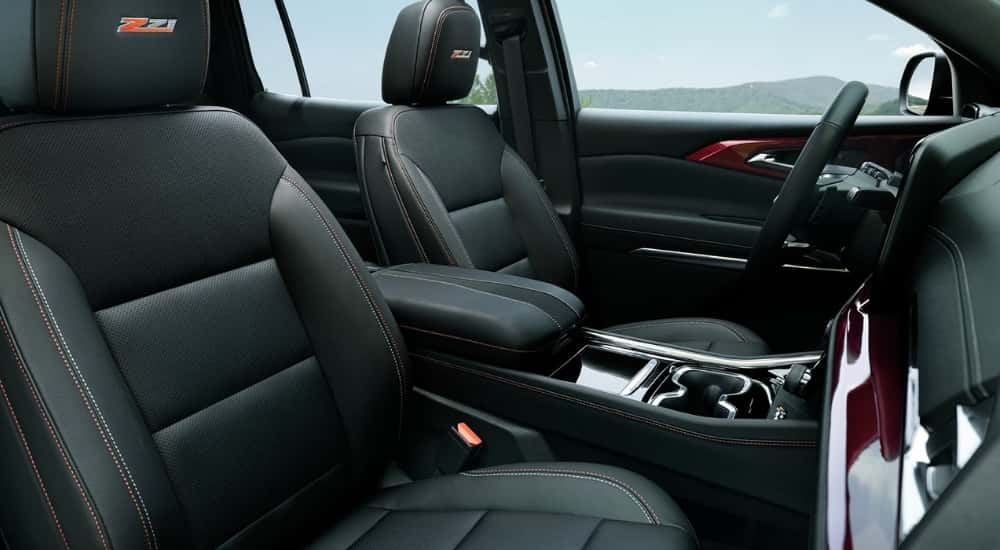
The Chevy Traverse and Honda Pilot both qualify as three-row models, but that designation doesn’t tell the whole story. While each SUV can accommodate up to eight passengers, or seven when opting for the available second-row captain’s chairs, the Traverse has a clear edge as far as the comfort factor is concerned. Drivers and passengers will enjoy a spacious ride, with the Traverse offering generous dimensions across all three rows. A longer wheelbase translates into more interior space than the Pilot, allowing even adult riders to comfortably occupy every seat. This makes the Chevy something of a standout in its class, especially when it comes to the third row.
For too long, automakers have treated the back seat like an afterthought. It might escape your notice if the third row is usually occupied by smaller kids, but this shortcoming is tough to ignore when growing teens and adults are asked to squeeze into the back. The Traverse and Pilot both buck this unfortunate trend to provide buyers with a roomy third row, allowing the SUVs to accommodate the whole family.
The same holds true for the second row, with the Chevy and Honda posting similar stats, but the Traverse has the advantage when you slide into the front seats. The driver and front passenger will enjoy 42.6 inches of headroom and 44.3 inches of legroom, which is a big improvement over the Pilot at 40.5 inches and 41.0 inches, respectively.
Infotainment and Hands-Free Tech
There are some areas where the Chevy Traverse and Honda Pilot are pretty evenly matched, but these three-row SUVs couldn’t be much different when it comes to their respective tech packages. The Traverse is one of the more advanced models in the segment, offering the largest infotainment display of any 2026 model while allowing drivers to enjoy one of the industry’s most sophisticated hands-free driving systems.
It all starts on the dashboard, where buyers will discover an expansive 17.7-inch touchscreen infotainment display. The display isn’t just an improvement on the Pilot’s 12.3-inch design. It easily tops the second-place finisher in the GMC Acadia by a full 2.2 inches. Size isn’t everything when it comes to these infotainment displays, but it sure has a big impact on the user experience, allowing drivers to safely and accurately access different settings, menus, and features that help to create a seamless driving experience. Chevy’s Google-based infotainment system also comes with a long list of standard features, including built-in GPS navigation, satellite radio, and more.
That said, it’s GM’s Super Cruise hands-free driving tech that really distinguishes the Traverse from the rest of the three-row pack. The critically acclaimed system earned MotorTrend’s Best Tech award in 2025 and has consistently been named one of the industry’s best offerings, allowing drivers to enjoy a true hands-free experience on over 750,000 miles of pre-mapped roads across the U.S. and Canada. Praised for its driver-engagement tech, capabilities, and performance, Super Cruise is here to transform your daily driving experience for the better.
Honda is a little behind the curve on hands-free tech, which puts the SUV at a major disadvantage as rivals continue to raise the bar. The 2026 Pilot does offer Lane Keeping Assist and Adaptive Cruise Control as part of the Honda Sensing suite, but these features fail to provide a true hands-free experience. It’s a bit of a disappointment, but at least the Pilot isn’t alone, as no current Honda model offers a true hands-free setup.
Towing Capability
Many of today’s three-row SUVs can rival the work-ready potential of a traditional truck, and the Traverse is no exception. It might not be able to match the raw towing ability of Chevy’s pickup all-star in the Silverado 1500, but the Traverse isn’t afraid to expend a little elbow grease with the ability to pull as much as 5,000 lbs. That’s a pretty standard figure for the three-row segment, but it’s the fact that both the FWD and AWD models can pull the same amount that distinguishes the Traverse from the rest of the pack. Every Traverse, from the entry-level LT to the sporty RS, is ready to put in a hard day’s work to get your cargo to its destination with minimal fuss.
The Honda Pilot matches the Chevy’s 5,000-lbs max towing capacity, but there’s a catch. To pull larger loads, Honda buyers will need to invest in the pricier AWD model. When relying on the FWD approach, the Pilot’s capacity drops to just 3,500 lbs, which could be a limiting factor if you’ve got big weekend plans for that boat, camper, or equipment trailer.
The Traverse Comes Out on Top
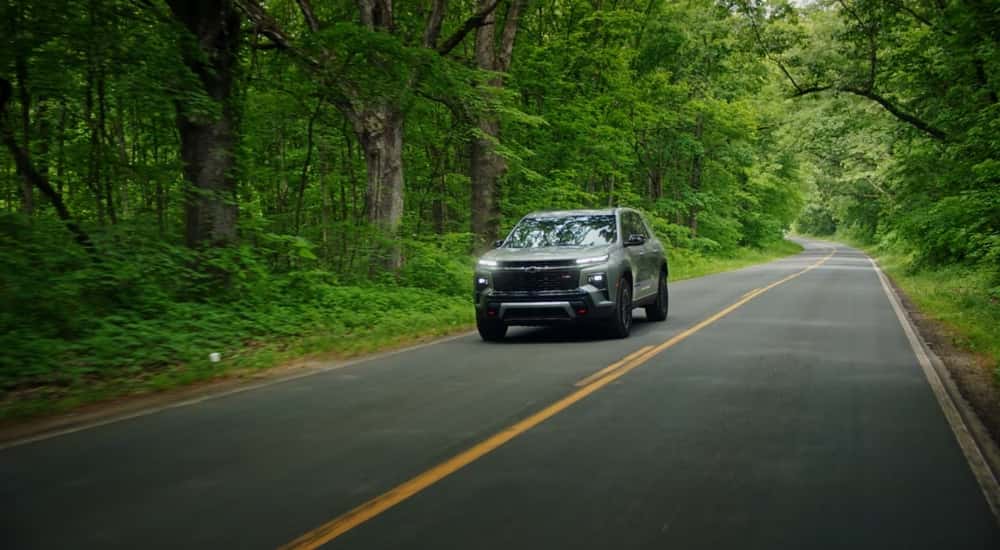
The Chevy Traverse has quietly become one of the industry’s most compelling crossover models, but it’s safe to say that the secret is out. The 2024 redesign saw Chevy perfect the three-row formula thanks to the addition of new safety tech, a new turbocharged engine, and the arrival of Super Cruise as a standard feature.
While all of these upgrades solidified the Traverse’s position at the top of the three-row segment, the new off-road-ready Z71 trim gives the SUV another advantage over its Honda rival. The Pilot’s TrailSport trim can handle some lighter off-road duty, but lacks the purpose-built gear you’ll find on the Z71, like its twin-clutch AWD system and frequency-based dampers. Factor in the Traverse’s superior performance, cargo and passenger space, infotainment tech, and towing ability, and it’s hard to see what the Pilot brings to the table. If you’re looking for a new three-row model that’s as practical as it is powerful, the 2026 Chevy Traverse is waiting for you here at DePaula Chevrolet.


0 comment(s) so far on Five Ways the New Chevy Traverse Tops the Honda Pilot