


Lightning Strikes Twice With the Return of the Chevy Bolt EV
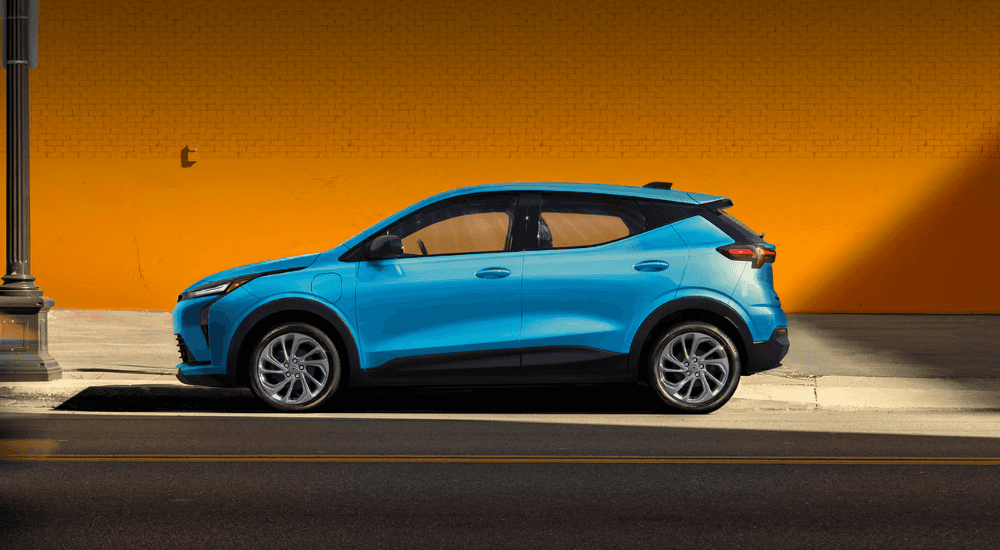
Chevy is ready to turn the EV segment on its head with the return of the Bolt EV in early 2026. While all-electric vehicles have made some significant headway over the last decade, they remain out of reach for many drivers, with the average EV selling for around $55,000. The 2027 Bolt will retail for almost half as much, with Chevy eyeing a sub-$30,000 MSRP that would instantly make the model one of the industry’s most affordable EVs. The subcompact has all the makings of a new market leader, boasting 210 hp, a GM-estimated 255-mile range, and a speedy charging system that’s sure to have eco- and budget-conscious drivers seeking out a Chevy Bolt for sale. Let’s explore some of the highlights of the 2025 Chevy Bolt EV and dive into the details around its performance, range, advanced tech, and how Chevy has managed to undercut the competition with its ultra-affordable crossover EV.
Bolt Background
The original Bolt EV joined the Chevy lineup in 2017 as a subcompact hatchback, but it certainly wasn’t Chevy’s first all-electric model. The Spark was a short-lived city car produced between 2014 and 2016. While it might not have stood the test of time, it played an important role in paving the way for the new Bolt. Chevy also led the way in the plug-in hybrid (PHEV) segment with the Volt compact, which offered up to 53 miles of all-electric range and 106 MPGe thanks to its 1.5L I-4 gasoline engine and 18.4-kWh lithium-ion battery pack.
These models enabled Chevy to gain valuable experience in hybrid and EV technology, directly informing the production of the first-generation Bolt. As EVs began to trend a little larger, Chevy introduced a more versatile version dubbed the Bolt EUV (Electric Utility Vehicle) in 2022. The subcompact shared the Bolt EV’s BEV2 platform and powertrain, but embraced a crossover design that made the vehicle a roomier and more practical option. The Bolt EUV was pulled from the market after just two years, but this hiatus appears to be thankfully short-lived, with a new and improved version set to hit the streets for the 2027 model year. For the new model year, the Bolt has new updates and has dropped “EUV” from its name.
High-Voltage Performance
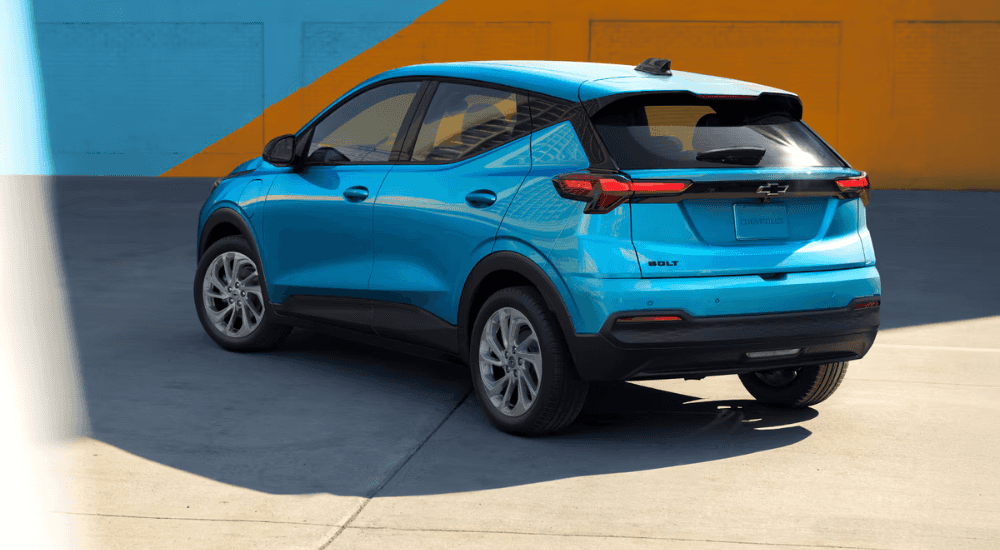
Developing an entirely new model can often be a little dicey, especially when you’re working with cutting-edge EV technology. However, Chevy has done everything in its power to ensure that the new Bolt gets off to a strong start by outfitting the crossover with many of the same components found on the tried-and-true Equinox EV. The Equinox crossover has enjoyed strong sales since it debuted in 2024, routinely ranking as one of the country’s best-selling EVs and serving as a great template for the Bolt’s own assembly. The new EV will feature the same integrated motor and electronics unit as the compact Equinox. While it will provide a little less power, it’s a pretty fair trade-off when you consider the $5,000 reduction in price. Between its 65-kWh lithium-iron-phosphate (LFP) battery and electric motor, the Bolt is expected to deliver 210 hp and offer a quicker zero-to-60 mph time than its first-generation counterpart.
Performance is only one part of the equation when it comes to an electric vehicle. While output and acceleration are certainly important stats, an EV’s charging rate can be a make-or-break factor for many drivers. While everyone understands that today’s EVs offer a cleaner, greener, and ultimately more affordable alternative to traditional gas-powered vehicles, few are willing to make the leap if the vehicles can’t keep pace in terms of convenience. The Bolt has seen significant gains, with a new system enabling the EV to nearly triple its charging speed, allowing you to get back on the road as quickly as possible. The first-generation Bolt was capable of recharging its battery at a rate of around 55 kW, but the new model increases that number to 150 kW and reduces the EV’s 10-to-80-percent charging time to just 26 minutes. This enhances the Bolt’s appeal for longer trips, especially since the EV now comes standard with a NACS charging port that allows drivers to access Tesla’s network of over 2,800 Supercharger stations.
Amped on Affordability
How did Chevy manage to craft a modern EV at almost half the cost of the typical model? It all starts with the battery. The high-capacity batteries that power today’s EV aren’t cheap to produce, and typically represent the most expensive component of an all-electric model. In fact, an EV’s battery can often account for 30 to 40% of its total price, which makes the component an easy target when you’re trying to reduce production costs. The Bolt’s secret weapon is a new lithium-iron-phosphate (LFP) battery that offers several key advantages over the nickel-manganese-cobalt (NMC) design found in many EVs. Like NMC batteries, LFPs are technically classified as lithium-ion batteries, but they’re significantly cheaper to produce due to their unique chemistry.
The cobalt and nickel used in NMC batteries are relatively expensive compared to the relatively common elements like iron and phosphate used in LFPs, which are both easier to source and more environmentally friendly. LFP batteries are also said to be more durable than their NMC counterparts, leading to a longer lifespan and lower lifetime ownership costs. Most importantly, there’s no downside in terms of total driving range. While the 2022 Bolt’s 65-kWh NMC battery gave it an EPA-estimated range of 247 miles, the new version’s LFP pack actually adds around eight miles while reducing per-unit production costs by as much as $6,000.
Chevy will be the first North American brand to employ the LFP approach in a mass-produced vehicle, and there’s good reason to think that the batteries will become even more affordable as time goes on. While the brand is currently sourcing the Bolt’s battery from a Chinese supplier, it’s also developing its own domestic production facility in Spring Hill, Tennessee, that’s scheduled to come online in late 2027. This should give Chevy a key advantage over many of its rivals and allow the automaker to become a driving force in the EV segment.
Upgraded Architecture
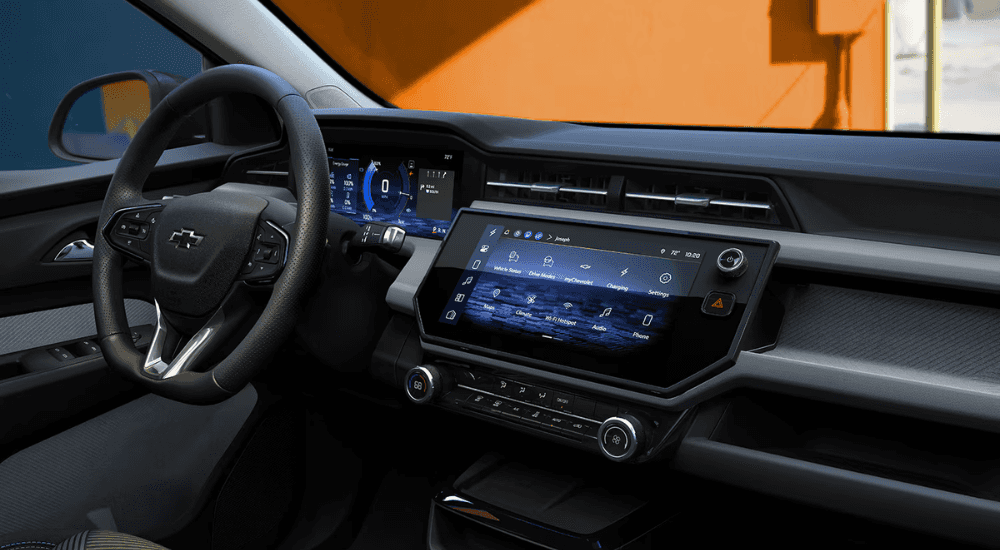
The Bolt’s interior has been fully refreshed with a generous array of new tech features powered by Chevy’s Global B electric architecture. The Global B Vehicle Intelligence Platform (VIP) represents a significant improvement over the Global A version that powered the first-generation Bolt, offering five times more processing power and enabling the EV to access over-the-air updates. This provides increased cybersecurity and facilitates the introduction of new advanced driver-assistance systems (ADAS). A generous 11.3-inch touchscreen infotainment system dominates the Bolt’s dashboard, enabling drivers to access a wide range of popular apps, games, and streaming services, including HBO Max. The infotainment system can be used to access turn-by-turn directions thanks to Google Maps, which seamlessly integrates with the EV’s innovative hands-free driving system.
Super Cruise is regularly cited as one of the best hands-free offerings on the market, allowing motorists to sit back, relax, and enjoy the ride on over 750,000 miles of pre-mapped roads across the U.S. and Canada. While the hands-free system might be the EV’s most advanced ADAS, it’s just one of more than 20 standard safety and driver assistance features you’ll find on the 2027 Bolt. The EUV will also feature a Google-powered voice assistant feature that allows you to adjust various settings, make phone calls, and even open your garage door without lifting a finger. The Bolt’s most groundbreaking tech feature is its Vehicle-to-Home (V2H) charging capability. When paired with the GM Home Energy charging station, the V2H feature enables the 2027 Bolt to act as a backup generator, providing crucial power during a blackout.
The Bolt Hits DePaula Chevrolet In Early 2026
Between the Bolt and the equally economical Equinox, Chevy is clearly aiming to position itself as a leader in the EV segment, and the timing couldn’t be better. U.S. drivers are adopting EVs at a record rate, with sales hitting a new all-time high in the third quarter of 2025 and enjoying a 30% year-over-year increase. An EV that retails for less than $30,000 is sure to make some waves upon its release in early 2026, and Chevy says that the Equinox will only become more affordable over time. The automaker has indicated that an even more affordable entry-level model will be introduced later in the 2027 model year. That said, buyers shouldn’t drag their feet if they want to experience the latest model since Chevy has characterized the Bolt’s revival as a limited-time offer. “It’s your chance to own a popular EV that’s affordable. So, if you’ve been waiting, this is the moment. Don’t miss it,” said Scott Bell, vice president, Global Chevrolet.


0 comment(s) so far on Lightning Strikes Twice With the Return of the Chevy Bolt EV