

A Guide to Faulty Brakes
You’ve likely driven on faulty brake pads. It’s not the most reassuring thought, but it doesn’t mean you did anything wrong. It’s difficult to identify when your brakes are failing, especially since it’s such a gradual decline. However, it’s very unlikely that the brake pads would suddenly stop working, and there’s a better chance that your brakes and your vehicle have been sending you indications all along.
While brake accidents only account for around 5% of the total car accidents in the United States each year, there’s a chance that this number could be cut in half if drivers were proactive and recognized the signs. Luckily, we’ve got you covered, and after reading the information below, you should be confident that you’ll never find yourself driving a vehicle with failing brakes.
If you’re anticipating some kind of braking issue, hold off on bringing your vehicle down to the brake repair shop in Albany, New York. Read our guide below and see if your car even has an issue in the first place…
How the Brakes Work
Slowing a car requires a tremendous amount of force, especially when you consider that you’re trying to stop a 1,000-plus pound machine that’s traveling relatively quickly. Luckily, your brakes will be responsible for most of the work.
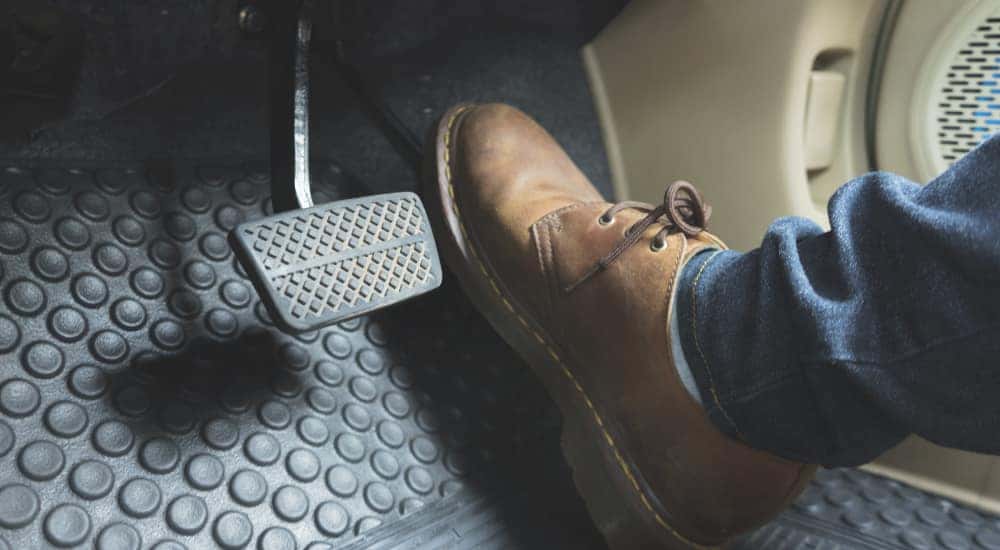
When you push down on the brakes, it begins a process that encompasses multiple mechanical parts. The force at which you hit the pedal will determine how much fluid is sent to the brakes, which subsequently allows the system to figure out how much force it should apply to the wheels.
As Esurance.com explains, the brake’s hydraulics determine how much pressure you applied via the peddle and multiplies it with the “necessary force.” The brake pads are then used to slow down the tires, and the friction will ultimately help stop your car. When the amount of friction produced begins to decrease, it’s a sign that your car needs new brakes.
Why does the friction decrease? General wear is an obvious factor, as you can’t expect the brake pads to sustain their production forever. Overheating brakes could speed up this process, as could leaking grease or oil.
It’s a good idea to be proactive in these situations and get your brakes changed when a problem arises. How do you determine when you need to visit a repairman? Keep on reading…
What’s that Squeaking Sound?
You’ve likely heard that awful high-pitched sound whenever you hit the brake, and that’s an indication that it’s time for a change. Surprisingly, it’s not the actual brakes making the squealing sound. The noise is coming from a small piece of metal called an indicator, and the whistling device sits on the brake pad. As the brake pads wear down over time, the metal slowly comes in contract with the rotor. When there’s about a quarter of an inch remaining on the brake pad, that’s when you’ll start hearing that distinct, irritating buzz.
A pulsating sound or a shaking steering wheel could be a sign that the drum or rotor are warped. This does apply directly to your brakes, and it’s certainly applicable (we’ll tell you why later on).
Due to a variety of circumstances, whether it be rust or just driving over a bump, the small “indicator” will sometimes fall off. There’s also a chance that your vehicle may not even be installed with the tiny chunk of metal. In these instances, you’re going to need to rely on some other factors to determine whether your brake pads are shot or not.
Ways to Identify Failing Brakes
As we mentioned, it’s not safe to rely on the squeal alone. One of the first indications you’ll receive regarding failing brakes will be via the dashboard, as a brake or Anti-Lock Braking System warning light will flash. This doesn’t necessarily mean your brakes are on the brink of failure, but it also shouldn’t be ignored. The light will at least indicate that it’s time for brake fluid (which could also indicate a leak), or it could be a clue of a more sinister issue (some wiring or electrical problem).
You should also be able to tell if your brakes are failing while driving, as your vehicle should give you plenty of signs. If your car seems to be pulling to one side when the brakes are applied, this could mean the system isn’t aligned properly. Furthermore, a general dragging feeling while accelerating could be another indication of brake failure. Esurance.com attributes the dragging to rusted emergency brakes, which could make that specific feature function as if it were activated (when it’s actually not).
Finally, the feel of the pedal could give you some insight into how your brakes are operating. If there’s a general “spongy” feeling, or if the pedal seems to be resisting the weight of your foot, that means air has gotten into the brake lines.
Checking More Than the Brake Pads
Just because your brakes seem to be failing, it doesn’t mean it’s your brake pads’ fault. The brake rotors are just as essential to the operation, as they provide the pads with something to clamp down on as they’re attempting to stop the wheels from spinning. If these aren’t operating properly (or they’re “warped”), it could do a toll to your car.
The rotors are certainly more durable than the brake pads, as you could replace the pads multiple times before having to even touch the rotors. If you find yourself with rotor issues, a mechanic may suggest “turning ” them, which means they’ll be smoothed down and symmetrical. It’d be better to replace the part with newer rotors, as they’re now designed to be thinner and lighter.
As CarCare.org explains, it could also be a good idea to switch to ceramic pads, as they are quieter, produce less dust, and work just as well as the regular pads, if not better. Meanwhile, you may have seen advertisements preaching the use of performance brake pads, but they wear out quicker while also compromising your rotors.
Getting Them Fixed
Similar to most repairs, it’s a good idea to leave the work to the professional. Unless you absolutely know what you’re doing, you could end up making an issue considerably worse.
The manufacturer’s brake pads are the logical purchase, as they were specifically designed to fix your vehicle. Of course, you could also opt for an aftermarket product, and that could save you a couple of bucks.
As CarCare.org notes, slotted brake pads may be a good idea if you find yourself replacing the part often. They’re pricier than ordinary brake pads, but they “disperse heat better,” thus providing better production. Keep in mind that these certainly aren’t required.
Ignoring brake-related issues is never a good idea, and it’s especially important as it starts to get cold and icy. You should now be able to recognize when there’s a problem, and getting a jump on the repairs will ultimately be better for your vehicle and for your safety.
If you happen to find that your vehicle is displaying one of the brake-failure indications, bring it in to your local mechanic or dealership. If you happen to be in Albany, New York, take your vehicle down to DePaula. The helpful staff will get your vehicle back to tip-top shape, and you’ll have no worries as the winter months march closer.


0 comment(s) so far on A Guide to Faulty Brakes