

Enjoy Big Savings With a Small SUV: 2027 Chevy Trailblazer vs 2027 Honda HR-V
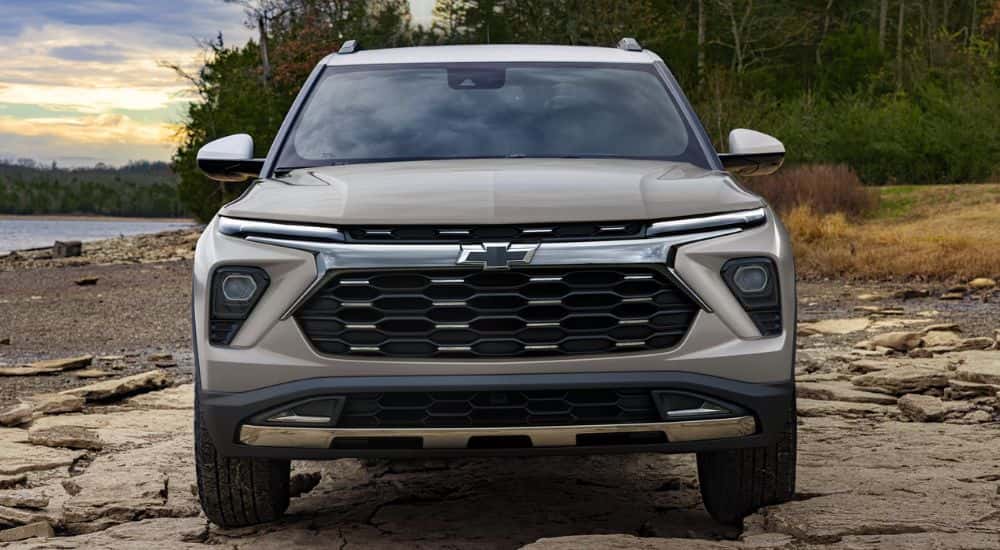
Choosing a smaller SUV doesn’t need to mean downsizing your expectations. While subcompact crossovers are known for their maneuverability and fuel economy, a good vehicle should also be able to deliver plenty in the way of performance, interior space, and advanced technology.
The Chevy Trailblazer checks all of those boxes, combining the inherent efficiency of a turbocharged engine with a refreshingly roomy cabin and a full slate of comfort, convenience, and safety features. Available all-wheel drive allows the Trailblazer to live up to its adventure-ready moniker, and its tech-focused interior gives owners access to a large infotainment display and other modern features.
The Honda HR-V represents one of the Trailblazer’s main competitors, but a close look reveals some key differences that drivers should be aware of before signing on the dotted line. Join us as we pit the 2027 Chevy Trailblazer vs 2027 Honda HR-V and learn which SUV deserves a spot in your driveway.
Under the Hood: Engines & Performance
The Chevy Trailblazer sports one of the smallest engines in its class, but still manages to provide drivers with a lively, responsive ride when you’re cruising through Albany. While it might measure in at just 1.2L, the engine’s turbocharged design allows the Trailblazer to produce a respectable 137 hp and 162 lb-ft of torque.
That should be more than enough muscle to power buyers through their daily driving duties, but the entry-level engine has one other trick up its sleeve. While most of its subcompact rivals—including the Honda HR-V—aren’t rated for towing, Chevy’s work-ready ethos is on full display with the Trailblazer and its 1,000 lbs of pulling power.
In the market for a little extra muscle? Simply swap the base 1.2L engine out for the available 1.3L turbocharged design that’s ready to provide a little excitement with 155 hp, 174 lb-ft of torque, and an 8.7-second zero-to-60-mph time that easily outpaces the HR-V’s 9.4-second sprint time. The larger engine can also be paired with a nine-speed automatic transmission that goes a long way towards establishing a stronger connection between driver and vehicle, and is notably absent on the HR-V.
Honda’s smallest SUV makes do with a basic 2.0L I-4 that ultimately suffers from a lack of forced induction. It might produce a touch more power with 158 hp to its name, but a turbocharger would have gone a long way towards upping the SUV’s performance profile. The Honda engine lags far behind in terms of torque at 138 lb-ft, is saddled with a CVT as its only transmission option, and, like much of the subcompact class, isn’t designed with towing in mind.
Hitting the Pump: Fuel Economy
While the two models are tough to separate in terms of pure output, it’s fuel economy, not performance, that tends to move the needle in the subcompact category. Chevy’s SUV holds a clear edge when it comes to efficiency, with both engine options easily outperforming the relatively thirsty HR-V.
Opt for the Trailblazer’s base engine, and you’ll be able to enjoy an expected 30 MPG combined against just 28 MPG combined in the 2027 Honda HR-V, but it’s the upgraded 1.3L turbocharged I-3 that really represents the most eco-friendly choice. The front-wheel drive model can achieve an estimated 31 MPG combined, and the all-wheel drive model is close behind.
It might cost you a little more at the pump, but if you regularly encounter tough winter weather conditions or are just in the market for a more confident driving experience, the all-wheel drive Trailblazer is tough to ignore. The all-wheel drive version of the HR-V trails just behind Chevy’s crossover at 27 MPG combined, but is a little underwhelming in stop-and-go traffic with its 25 MPG in the city.
These fuel economy figures are helpful for a basic comparison, but most drivers tend to think in terms of dollars and cents. According to the EPA, the Trailblazer is the thriftier choice, with the base engine running drivers around $2,100 in average annual fuel costs. Pull up to the E85 pump, and that figure could drop as low as $1,800. The larger Trailblazer engine will only run you $2,000 a year, but the HR-V averages around $2,250.
Space to Stretch Out: Cargo & Passenger Room
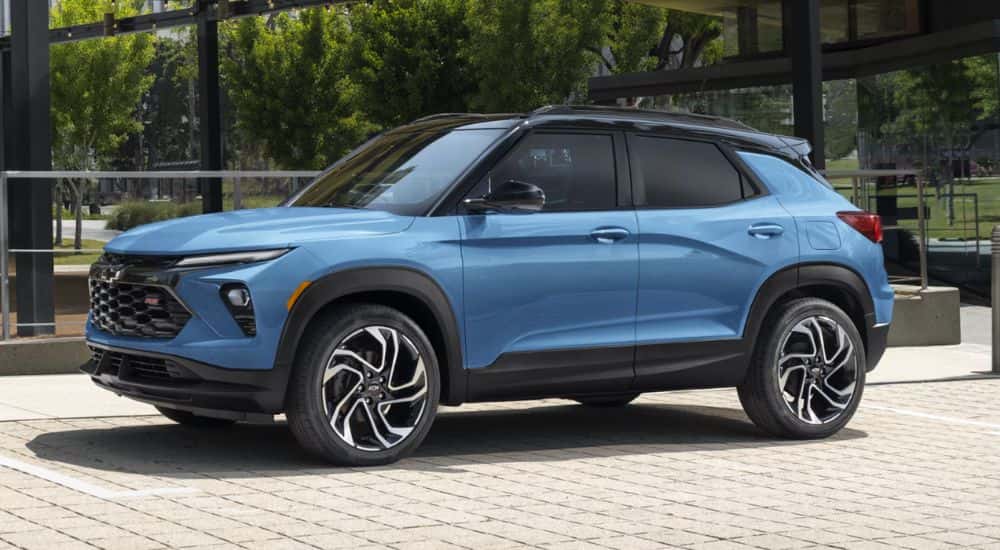
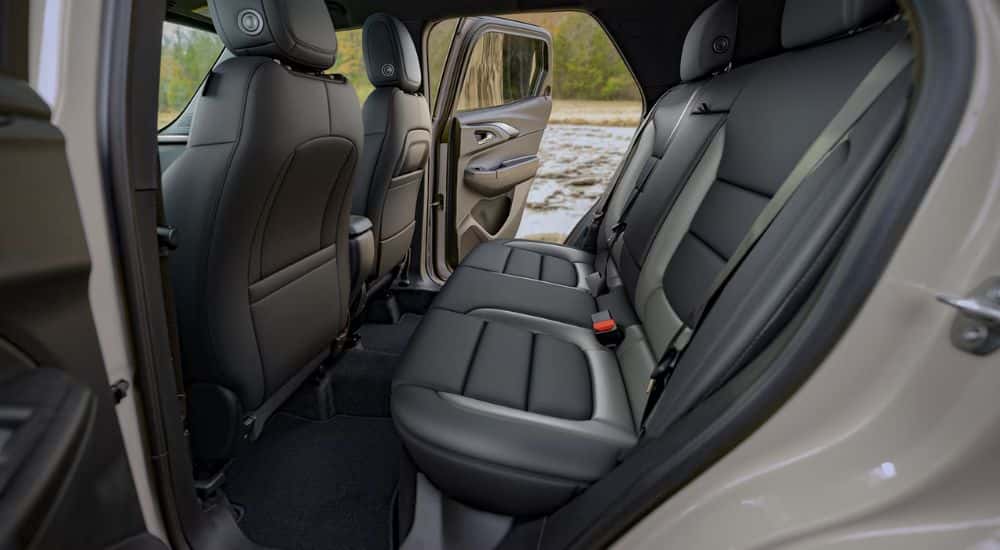
Choosing a subcompact model can still provide plenty of cargo and passenger space. These small crossovers are known for their maneuverability and fuel economy, but a smaller footprint doesn’t necessarily mean a cramped interior. While the Trailblazer isn’t the largest option in its class, its right-sized design is sure to earn it some points amongst those seeking a comfortable, practical SUV that’s primed for the daily commute.
From groceries and road trip supplies to sports equipment and luggage, the Trailblazer can handle it all with 25.3 cu.ft. of cargo space behind the second row. Need to accommodate some bulkier items? Every Trailblazer is equipped with a flat-folding front passenger seat that’s perfect for longer cargo, or simply fold down the backseat and the SUV’s cargo area expands to 54.4 cu.ft.. It’s a strong showing in the subcompact segment, and one that gives owners the opportunity to enjoy all the utility of an SUV while leveraging the inherent efficiency of the crossover design.
The HR-V trends just behind the Trailblazer in terms of standard cargo capacity, with 24.4 cu.ft. on offer, and actually represents a slightly roomier option when the second row is folded, but it’s a whole different ballgame when it comes to passenger space. While Honda has devoted most of its attention to the HR-V’s first row, and does provide slightly more leg, shoulder, and hip room when compared to Chevy’s SUV, second-row passengers have been treated like a bit of an afterthought.
Second-row riders will have to make do with just 37.7 inches of rear legroom in the HR-V compared to 39 inches in the Trailblazer. It’s a similar story in terms of both front and rear headroom, and it marks one of the key differences between the two models. If you’re a solo driver who is just looking for a new commuting vehicle, the HR-V’s relatively tight second row might not be an issue, but if you’re regularly transporting larger passengers or need a SUV that’ll grow with your family, the Trailblazer is tough to ignore.
Upgrading the Drive: Modern Cabin Tech
If there’s one area where the Trailblazer really outshines its Honda rival, it would have to be interior tech. Chevy’s subcompact SUV has the HR-V beat in several important categories, from its larger infotainment display and digital gauge cluster to its standard Wi-Fi hotspot, available 360-degree camera system, and Bose seven-speaker audio system.
We’ll start on the dashboard, where Chevy buyers will find an 11-inch touchscreen infotainment display running the latest Chevy Infotainment System with Google built-in. The HR-V’s nine-inch display is no match, and this trend carries over to the instrument cluster, with Chevy offering an eight-inch screen instead of a seven-inch cluster.
Both models offer wireless Apple CarPlay and Android Auto smartphone connectivity across the lineup, though the Trailblazer is the more tech-forward option thanks to its built-in Wi-Fi hotspot. It’s easy to quickly run through your monthly data allotment when you’re always on the go, but the Trailblazer’s in-vehicle Wi-Fi allows users to scroll to their heart’s content no matter where the road might take them. This is sure to come in handy when trying to keep the kids occupied on longer road trips, or binging your favorite podcast as you brave rush-hour traffic.
Peace of Mind: Advanced Safety Features
Safety is another strong suit for the 2027 Trailblazer, which is packed with all of the latest advanced driver-assistance systems (ADAS). Chevy’s crossover offers all of the most important safety tech, including:
- Forward Collision Alert
- Automatic Emergency Braking
- Lane Keep Assist with Lane Departure Warning
- Adaptive Cruise Control
- Lane Change Alert with Side Blind Zone Alert
- Rear Cross Traffic Alert
- Rear Park Assist
There is even an auto-dimming rearview mirror that’ll prevent you from being blinded by an inconsiderate driver who is riding your tail.
The HR-V offers many similar features, and earns some points for its Traffic Sign Recognition System and Low-Speed Braking Control, but ultimately fails to distinguish itself from the Trailblazer in any meaningful way. Both models ultimately earned a five-star overall safety rating from the National Highway Traffic Safety Administration (NHTSA), but that stat doesn’t tell the whole story.
Protecting New Drivers: Teen Driver Tech
The HR-V might be able to compete with the Trailblazer in terms of ADAS, but it’s at a distinct disadvantage when it comes to keeping new drivers safe behind the wheel. Handing the keys over to a teen driver is a rite of passage, but it can also be a nerve-racking experience for parents and guardians. Chevy has engineered around this issue with its innovative Teen Driver technology, which serves as an important safety net for fledgling motorists.
The Teen Driver system allows parents to set predetermined speed limits, monitor their teen’s driving habits, limit audio volume, and even implement a Buckle to Drive feature that prevents the vehicle from shifting into drive until the seatbelts are secured. Throw in an in-vehicle report card that provides parents with detailed data on speed, distance, and active safety alerts, and it’s hard to imagine a better way to keep tabs on your teen driver.
Honda hasn’t entirely thrown in the towel when it comes to teen driver tech, but its own Honda Driver Coaching app is a bit limited when compared to Chevy’s system. Designed as a teaching tool rather than a form of parental control, the Honda Driver Coaching app can monitor braking, steering, and acceleration, provide a driving score, and even includes a video library with helpful driving tips. What it can’t do is actually prevent a teen driver from speeding or leaving their seatbelt unfastened, which significantly limits its appeal for anxiety-ridden parents.
Find Your Perfect Subcompact SUV at DePaula Chevrolet
If you’re tired of making compromises when searching for a subcompact SUV, it’s time to discover the 2027 Chevy Trailblazer at DePaula Chevrolet. This crossover makes a compelling case for itself, offering a satisfying combination of efficiency, performance, and utility while also integrating the latest safety and infotainment tech.
Young professionals appreciate the Trailblazer’s impressive fuel economy and the SUV’s ability to navigate densely packed parking lots and busy highways. First-time buyers get more for their money thanks to the SUV’s expansive infotainment display and built-in Wi-Fi hotspot. Growing families are sure to value the Trailblazer’s ample dimensions.
Factor in the Trailblazer’s low starting price, towing ability, roomy interior, and Teen Driver tech, and it’s not hard to see why the SUV has become such a popular choice in the subcompact segment. The HR-V remains a respectable option if you’re searching for a small crossover, but Honda’s SUV simply lags behind the Trailblazer in a few too many areas.


0 comment(s) so far on Enjoy Big Savings With a Small SUV: 2027 Chevy Trailblazer vs 2027 Honda HR-V