


Get Inspired by the Past in Clifton Park
Due to current health concerns, please be aware locations may have restrictions.
The summer of 2020 has not been the kind of summer to be remembered for wonderful vacations. Everything from going to the store to celebrating graduations has been harder than ever, and closed venues have left us with few places to go for an escape from it all. However, many Americans have met the challenges of our time with compassion and creativity, finding new ways to keep us connected and to bring the escapes to us. And we at DePaula Chevy would like to contribute to these efforts by putting a spotlight on our neighbors in Clifton Park, NY.
These are historic times that will be remembered for decades to come, so we feel there’s no better time to remember the history of our towns and families. Through history, we can remember not only the mistakes of the past so that we may be wiser, but the adversity that was overcome so we may rise to the challenges we face today with the same perseverance. Clifton Park, a town of several historic hamlets, is steeped in history worthy of our remembrance. These sites from which we can be inspired by architecture, industry, and community are all over Clifton Park and can still be visited today. Let’s take a look at some of them here.
Vischer Ferry Historic District
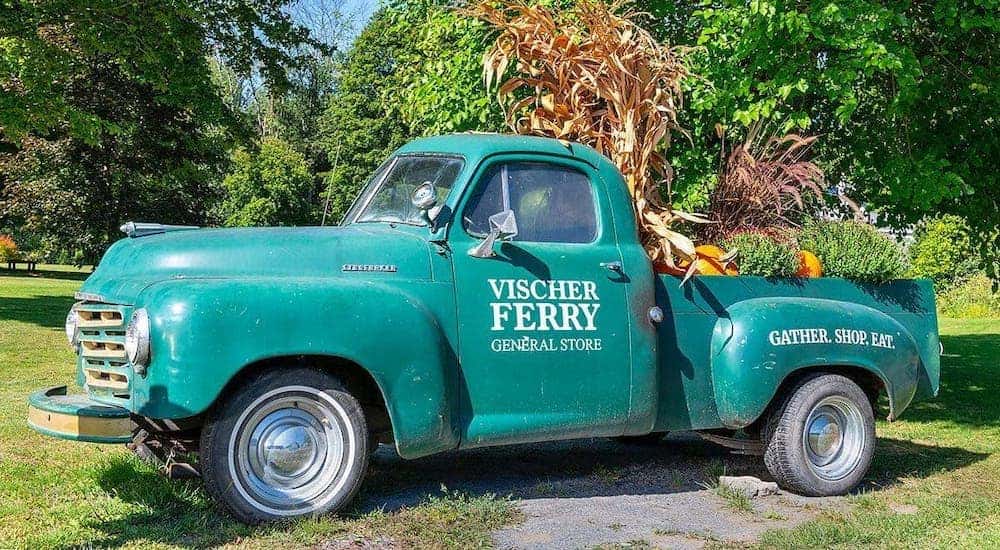
The Vischer Ferry Historic District, found along Riverview Road, is a 700-acre district encompassing parts of the Vischer Ferry hamlet and the entire Vischer Ferry Nature and Historic Preserve. With wetlands, parts of the Erie Canal, and the origins of settlement in the region, it provides a lot to do for people with all kinds of interests. Miles of trails and paths allow for hours of hiking, biking, or casual strolling. The wetlands are recognized as a “Bird Conservation Area” with over 200 species recorded, including magnificent Great Blue Herons.
Those with marine and industrial interests will appreciate the site’s preservation of the Erie Canal legacy. Segments of the original 1825 Erie Canal construction, as well as the enlarged 1842 canal, are accessible within the preserve. Visitors can gain insight into the function of the lock system at Lock 19 of the historic canal. A restored truss bridge from 1862 and Clute’s dry dock, used to repair boats back in the day, make it easier to picture the days before interstate highways. Imagine using a barge on a canal to travel across the entire state of New York – imagine what it took to build the canal in the first place!
Historic markers are dispersed throughout the district, offering information to reflect upon during your visit. Clifton Park’s oldest settlements are here, including the pre-Revolutionary Vischer Homestead built by Nicholas Vischer in 1740. Architectural buffs will recognize the Federal-style front section added in 1806. In fact, various architectural styles are evident throughout the district, including a large concentration of Greek Revival structures. Columned porticos, pilasters and other elements of the style are in abundant evidence, granting a peek into the past when this was a canal worker’s town.
Grooms Tavern Complex
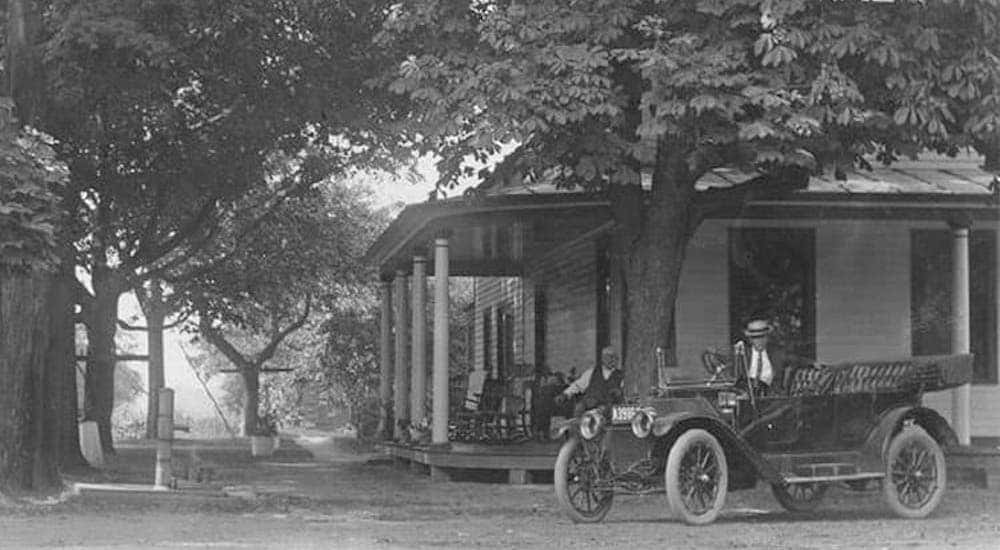
A long-time “town hall” of sorts, the historic Grooms Tavern at the intersection of Miller Rd/Sugar Hill Rd and Grooms Rd has changed hands and faces many times in its storied existence. Today it’s a historic and cultural center and can be reserved for social, community, or educational events, among other uses. It’s a fitting purpose for a building that has always been at the heart and soul of the Clifton Park community.
The building was originally constructed as a grocery store around 1800, and from 1808-1818 it was operated by Eldert Vischer, son of Nicholas Vischer, and founder of the Vischer Ferry rope bridge across the Mohawk River after the Revolutionary War. The site’s location made it a popular stop for travelers headed in all directions and in need of food, rest, and supplies.
After passing through several hands, James Groom acquired the store around 1826 and, by 1828, had converted it into a tavern. Groom’s son Samuel took over in 1847. He remodeled the building with Greek Revival elements and integrated his blacksmith and wagon shops to the complex as well. The wagon shop, in particular, shows evidence that it was a popular meeting place – local marriages, names of patrons, and lists of storekeepers are all inscribed on the walls, a permanent record of who was there over 150 years ago. Try to picture yourself in Victorian dress, with smoke drifting in the bar of the tavern, clangs ringing from the blacksmith’s shop, and a newlywed couple inscribing their names in the wagon shop where their carriage was built.
The next century was a tumultuous one for the tavern. It transitioned back into a store and hosted the post office at the turn of the century. Jim Groom, son of Samuel, acquired the store in 1910; after his death, and after nearly 100 years under Groom ownership, his widow sold the store to Ed Klingbeil in 1923. Ed operated the general store until his death in 1970, leaving a legacy that included a gas pump he ran until 1940, a billiard’s room on the second floor, and a “colorful” reputation that endeared him to local historians.
After his death, the store was sold and operated as a country store until 1988, after which it fell into disrepair. It was bought by the Town of Clifton Park in 1999 and has since been restored to continue to serve as the cultural center of the town that was born there.
Architectural Heritage
A number of other sites are preserved for their architectural heritage that might otherwise be lost. Two prime examples of this are the Jonesville Cemetery and the Nathan Garnsey House.
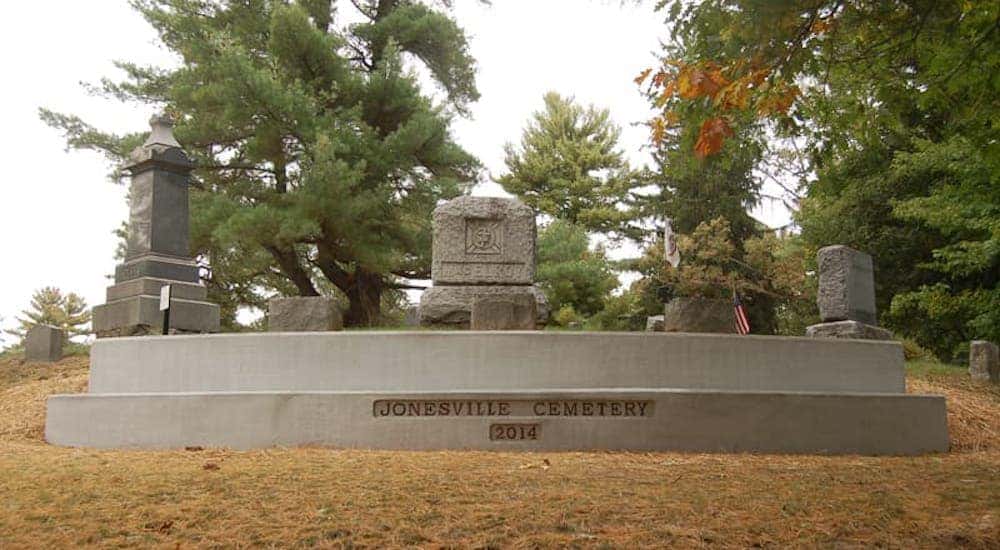
The Jonesville Cemetery was designed in 1864 by Burton Thomas, who is credited with at least 22 other cemetery designs. Jonesville, in particular, is cited as an important example of rural Picturesque cemetery design, a “garden-style” layout with a sublime, romantic atmosphere. Alternating flat and rolling terrain, combined with natural-looking landscaping and serpentine pathways, the design style was meant to induce a contemplative atmosphere, provide a suitable place to honor the dead – and have a picnic.
Access to the cemetery is from Usher Rd near the intersection with Longkill Rd. Consider grabbing lunch at Classic Crust in the historic Jonesville Store building at the nearby corner of Longkill and Main St/Hatlee Rd before or after your visit to reflect on the experience. The very picture of serene country beauty, the Jonesville Cemetery is no longer a place for picnics as it was in Victorian days, but it still makes for a lovely – if somber – outdoor excursion.
The Nathan Garnsey House, constructed in 1791, is on the north side of Rt 146 near Rexford and was still occupied by members of the Garnsey family as of 2017. Immigrants from Connecticut, the Garnsey’s, brought their New England architectural style with them, having the chimney built in the center of the home. The brickwork, for which one Jehiel Robbins was responsible, has a distinctive styling that was only noted on a handful of examples across Vermont and New York. One of these is the Payne House in New York, which was also laid by Mr. Robbins.
In addition to superb and distinctive brickwork, the Garnsey House represents a blend of “popular, national and somewhat more-academic modes with regional vernacular traditions.” Add to the mix the many characteristics of the Federal style that was coming into fashion at the time, and the result is a beautiful home that, to someone in the know, is a practical cornucopia of late-18th-century architecture. It’s hard to imagine a better representation of American heritage – the blending and adaptation of styles from immigrants of countless backgrounds are what built this country, and it shows in the architecture of the Garnsey House.
Reflections on the Past
Clifton Park is home to a dozen historic sites, preserved and restored not just for entertainment but for reflection. Architecture is art, and it’s on full display at all of these sites. The more one learns about it, the more one can understand their ancestors. After all, they were real people just like us, with unique backgrounds and needs, desires, strengths, and weaknesses of their own.
They built the Town of Clifton Park and bickered in town halls at Grooms Tavern for decades, keeping the community strong. When they wanted a faster way to travel, they built the Erie Canal, a mammoth endeavor, and a testament to American ingenuity. We can draw wisdom, courage, and inspiration from seeing for ourselves what they left behind, and then asking ourselves what we’ll leave behind for the future. In times that will be remembered for a hundred years or more, that’s a road worth traveling.


0 comment(s) so far on Get Inspired by the Past in Clifton Park