


How to Read Your Car’s Tires
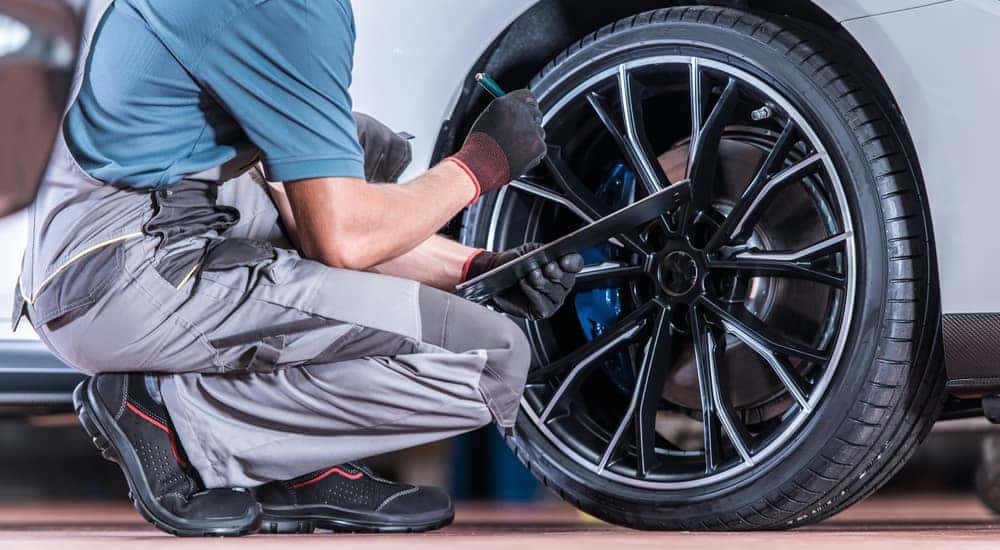
When is the last time you looked at your tires? I mean really looked, inspected, to make sure that your tires were in good shape?
The importance thing to remember about tires is that they connect you to the road and keep you moving safely. However, as a critical safety feature, tires are often taken for granted.
Your tires reflect the overall condition of your car and alert you to any existing or potential problems.
If you’ve neglected your tires as most of us do, it might be time to stop by your local Albany tire stores and start fresh with a new set of tires.
Learn how to read your tires in order to respond ahead of time before a small maintenance issue transforms into big trouble.
Start with the Basics: Tire Pressure, the Key to Careful Maintenance
Before you start investigating your tires for problems, make sure you check the your tire pressure first.
Tire pressure isn’t just important for safety. Properly inflated tires equal improved fuel economy. So, if you want to save a few a bucks, make sure there is enough air in your tires.
Make this a monthly habit and bear in mind that tires lose 1 psi each month from regular wear and tear.
An air compressor can help you monitor and maintain proper tire pressure. Always check your vehicle’s owner’s manual to ensure that you know the recommended amount of pressure for your tires.
Measure your tire pressure when the tires are cold, ideally before you’ve even driven anywhere that day. If you check your pressure after you’ve arrived at your destination, your tires will be too warm, and the air inside will have expanded, which won’t give you an accurate reading.
Once properly inflated, it’s important to visually review your tires and give them a close look in order to spot irregularities.
But, you also need to run your hands over your tires, focusing on the tread in particular. Sometimes, it is easier to feel a problem instead of see it.
What do those problems look or feel like?
Read on…
Tire Problem #1: Right Down the Center Wear
If your tire shows wear and tear along the middle, you’re likely looking at a tire suffering from “center wear.”
All this means is that your tire was overinflated, which only allows the center part of the tire to connect with the road.
In this case, your car’s traction is compromised because not all of the tire is making adequate contact with the road.
But, if you check your tire pressure and find that your tires are properly inflated, you might be looking at mismatched wheels and tires. In that case, swing into one of your Albany tire stores and have the team there match a set of tires to your wheels properly.
Tire Problem #2: Blemishes like Cracks and Bulges
Cracks can result from running into a curb or bouncing over a pothole. We’ve all experienced that sudden jarring feeling from making contact with something in the road that we either didn’t see or couldn’t avoid.
If your tires aren’t properly inflated, you risk increased damage from impacts like this.
Little cracks can also signal an aging tire, or result from harsh weather conditions.
Bulges are like blemishes on your tire, and similar to a blemish, the appearance of little bulges indicates an internal problem. Something has happened below the surface and is now coming to a head. Whatever caused it could have happened weeks or months ago, but the bulge is just now showing externally.
For that reason, this tire needs to be replaced right away. Even though you are just now seeing the damage, it has been there for a while and continuing to drive on this tire is too risky.
Tire Problem #3: Cupping, Sometimes Called Scalloping
Now this is where you should see the connection between the condition of your tires and other components on your car.
What you’ll see in the case of cupping or scalloping is an uneven surface, what has been described by some service technicians as looking like little hills and valleys. Although this topographical pattern will appear on the tire itself, the problem originated from your car’s suspension system.
If any parts of your suspension are worn out or somehow broken, the tires will not ride evenly. Instead, they will bounce and as they do some parts of the tire will wear down faster than others.
Most of the time this should tell you that your shock absorbers need to be replaced, but it’s a good idea to check any other connections between the wheel and the car, too.
Tire Problem #4: A Diagonal Swipe
Sounds like a combat move, but it’s actually just another term for tire damage.
Similar to cupping, a diagonal swipe usually occurs on the back tires of a front wheel drive car that has the wrong toe setting.
Besides improper toe settings, lags between tire rotations, and routinely transporting heavy items in the cargo area or trunk of your car can cause a diagonal swipe. The problem with loading up your cargo area is that the weight can alter your car’s suspension, which then results in a diagonal swipe.
Tire Problem #5: Wear On the Outer Edges
So, this is like the opposite of center wear because the center of the tire is intact, but the exterior edges show some damage.
What does this mean?
Your tires are underinflated.
This is very dangerous, perhaps the most dangerous symptom of tire trouble. When tires are underinflated, they flex more, which causes heat to build up. If it builds too much, your tire will likely end in a blowout.
The other problem with tires that are not sufficiently inflated is that they cannot adequately withstand dings, which means that your alignment and suspension could be compromised.
Automotive service experts suggest that you shouldn’t rely on your tire-pressure monitoring system because the baseline for the system’s alert is twenty-five percent underflation.
Tire Problem #6: Feathering, But Not Like Farrah
This is not the 1970s hairstyle inspired by Farrah Fawcett.
Feathering on a tire results from an incorrect toe setting, or a broken suspension bushing, which alters your car’s alignment.
You might feel the feathering, which runs across the tire, more easily than you can actually see it.
Tire Problem #7: Smoothed Out Flat Spots
Blame the squirrel that ran out in front of your car for this tire issue. When you slam on the brakes, sending your car into a skid, you’ll likely end up with a flat spot on the surface of your tire.
If you leave your car parked somewhere for an extended period of time, you might discover a flat spot where the tire was in constant contact with the ground. These flat spots are different from those resulting from skids because they do not show tread wear; however, the tire will still appear irregularly shaped.
Bias-ply tires are more apt to get a flat spot from resting in the same place, more than radial tires.
Tire Problem #8: Heel-Toe, Off the Dance Floor
Not the dance move, a heel-toe on a tire signals a problem.
This kind of heel-toe results from not keeping up with your regularly scheduled maintenance, specifically in this case, tire rotation.
A very common tire problem, heel-toe looks and feels somewhat similar to feathering and is symptomatic of improper alignment, which can also be caused by broken suspension bushings, damaged ball joints, or worn out wheel bearings.
Tire Problem #9: Wear and Tear on One Side
Single-side wear happens when a single side of the tire breaks down quicker than the other side.
What causes this?
An misaligned camber setting is the culprit, but can be corrected by scheduling your car for a service, during which the technicians will ensure your tires’ proper alignment, and check the ball joints, suspension bushings, springs, and toe settings.
Tire Problem #10: Shortened Tread-Wear Indicators
These are the spaces between the tire treads. They are situated between the treads and therefore do not make contact with the road. However, when the treads wear down to the point that they are practically matched up against the indicators, it is time to replace that tire.
Generally speaking, most tire treads run 11/32 inches deep, and that depth helps the tire get rid of water in order to avoid hydroplaning.
Tread wear indicators sit 2/32 inches high. Experts suggest that tread should run between 5/32 and 6/32 inches for snowy weather and 4/32 inches for rain or wet conditions. After 4/32, your car will not perform as well in adverse weather, making your drive more dangerous.
Be sure to check your tire tread indicators and do not allow them to wear down to the point where they are flush with the tread on your tires.
While this may seem like a lot to keep up with, just make sure that you are following the routine maintenance schedule recommended by your vehicle’s manufacturer. That, at least, gives you backup in the form of auto service experts.
Remember, your tires connect you with the road. Read them carefully and keep them in top condition as a safety investment for you and your passengers.


0 comment(s) so far on How to Read Your Car’s Tires