


Midsize Truck Showdown: 2026 Chevy Colorado vs 2026 Jeep Gladiator
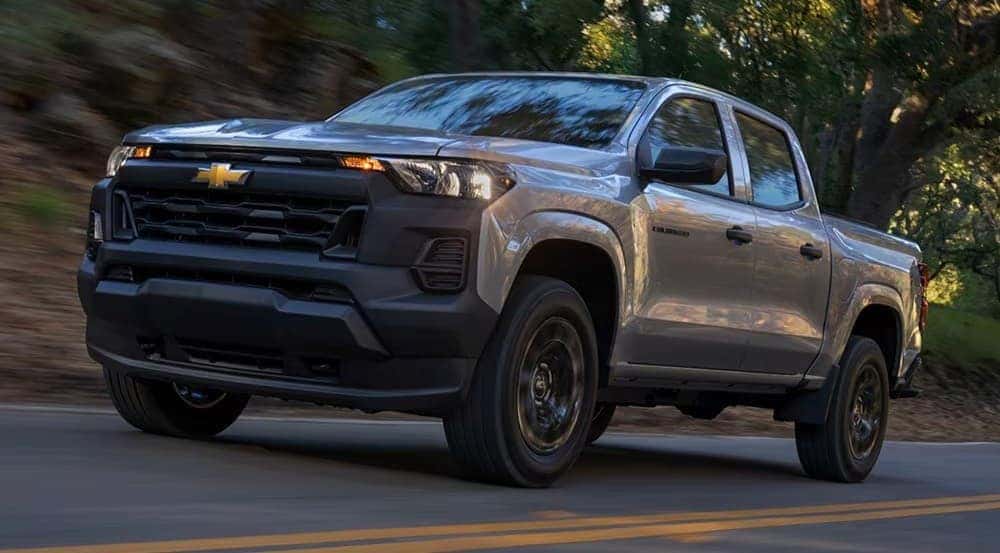
Drivers searching for a midsize truck want versatility, capability, and everyday practicality without the excessive bulk of a full-size pickup. The midsize truck segment has shifted dramatically in recent years, answering buyers’ needs for comfortable daily commuters that can also serve as weekend trail companions and capable workhorses.
For shoppers diving into this highly competitive segment, finding the balance between on-road refinement and comfort and off-road capability is a priority. The 2026 Chevy Colorado vs 2026 Jeep Gladiator debate represents two completely different automotive design philosophies.
The Gladiator leans heavily into its Jeep Trail Ready heritage, sharing a boxy design and removable body panels with its iconic sibling, the Wrangler. On the other side, the Colorado doubles down on modern powertrain efficiency and advanced chassis dynamics for well-rounded performance on urban streets and remote trails alike.
Which pickup ticks more boxes and gives buyers the best mix of on- and off-road utility? To find out, it’s important to look under the hood and evaluate full factory specifications, powertrain configurations, and trim-specific features. This comparison focuses on capability and everyday driving dynamics to provide a fair contrast of these two popular midsize pickups.
Powertrain Performance and Turbocharged Efficiency
The engineering differences between the 2026 Colorado and the 2026 Gladiator are very glaring. The 2026 Chevy Colorado utilizes a standard 2.7L TurboMax I-4 engine across the entire lineup, delivering a healthy 310 hp and an impressive 430 lb-ft of torque. This modern turbocharged configuration provides immediate low-end power, allowing the truck to accelerate briskly from a complete stop and handle towing and hauling across a range of road conditions. Access to a lot of torque is how a truck builds momentum, especially when towing a boat or RV or hauling a bedful of gear.
In contrast, the Gladiator relies on an aging, naturally aspirated 3.6L Pentastar V6 engine. While the Jeep’s V6 produces a respectable 285 hp, it significantly lags behind in pulling power, generating only 260 lb-ft of torque. That’s a significant difference from the Colorado, and one that creates buyer’s remorse over time. Because a naturally aspirated engine requires higher engine revolutions to reach peak power, drivers will notice the difference on the road. The Gladiator requires much more effort to maintain speed when climbing steep grades, hauling heavy gear, or towing a trailer.
The Colorado’s torque advantage transforms the driving experience for commuters, weekend adventure-seekers, and small business owners. Its torque output matches that of many full-size pickup truck engines. In fact, the Colorado’s TurboMax engine is also the base engine for its big brother, the Silverado. Paired with a smooth-shifting eight-speed transmission, the Colorado delivers power effortlessly.
Real-World Towing, Payload, and Daily Workhorse Utility
When evaluating true pickup truck utility, midsize truck buyers need a vehicle that can punch above its weight class. Both the 2026 Colorado and the Gladiator come in with a max towing capacity of up to 7,700 lbs when properly equipped. The difference is in the details, however. The way these trucks handle maximum loads varies significantly due to their frame layouts and suspension designs. The Colorado excels at payload capacity and cargo bed flexibility, which are critical for DIYers and small business owners.
Select Colorado trims offer a maximum payload capacity of 1,846 lbs, allowing drivers to carry tools, construction materials, or their buddy’s worldly possessions during a move. The Gladiator, weighed down by its heavy, solid-axle front suspension and specific frame design, comes in with a much lower maximum payload capacity of around 1,720 lbs on popular trims.
Also, the Colorado’s cargo bed features integrated innovations that make daily hauling less of a chore. The tailgate incorporates a built-in, weather-resistant StowFlex storage compartment that’s perfect for stowing tools, recovery straps, or even a few bags of ice for the next tailgate party. Combined with multiple tie-down points and available 120-volt bed power outlets, the Colorado keeps up with active lifestyles, serving as a mobile workstation that adapts to demanding projects easily and serves as a power source when you’re camping in the backcountry.
Ride Quality, Cabin Comfort, and Everyday Maneuverability
While off-road capability is a massive selling point, especially for the Jeep Gladiator, the vast majority of midsize truck drivers spend their time navigating asphalt, suburban areas, and tight parking structures. The Colorado uses an independent front suspension that delivers precise steering feedback and a comfortable, car-like ride over uneven pavement. Chevy engineered the Colorado to minimize body roll when cornering, making it especially maneuverable and stable when navigating narrow city streets.
The Gladiator’s more traditional solid front axle favors slow-speed rock crawling, but comes with notable compromises during the daily commute. On the highway, the Jeep’s axle feels loose, requiring constant steering corrections to stay straight and centered in its lane. Additionally, the boxy, removable roof panels on the Gladiator create a significantly louder cabin environment, with wind and road noise penetrating the interior at highway speeds. If your daily commute involves catching up on phone calls, prepare yourself to speak louder and listen more closely.
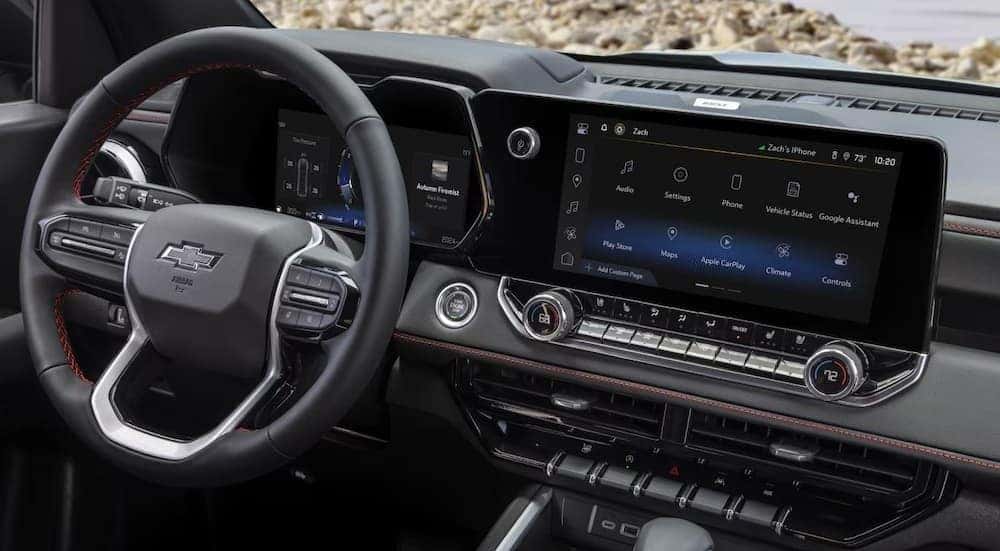
Inside the cabin, the Colorado treats passengers to a thoroughly modern, tech-forward space focused on ergonomics and easy-to-use controls. Every trim features a standard 11.3-inch diagonal infotainment screen equipped with smartphone compatibility and Google built-in. The bottom line is this truck is designed for daily driving, with features and ergonomics that stave off fatigue and create an oasis from outside noise.
While the Gladiator’s standard touchscreen is slightly larger than the Colorado’s at 12.3 inches, its functionality is hampered by the truck’s excessive road noise. After all, streaming a playlist or podcast is not as enjoyable when you have to crank the volume up to hear it. Combined with the rougher ride, the Gladiator downgrades daily driving enjoyment overall.
Finding the Ideal Midsize Truck Balance
Choosing between the 2026 Chevy Colorado and the 2026 Jeep Gladiator ultimately comes down to prioritizing either niche off-road utility (à la Jeep’s Trail Rated heritage) or balanced, everyday capability. For most midsize truck buyers, that balance is absolutely critical for long-term satisfaction.
The Gladiator appeals to drivers who specifically want an open-air, convertible driving experience and the ability to remove doors for technical trail rides. However, as a traditional pickup truck expected to handle a wide array of daily tasks, buyers will have to make a lot of compromises.
The Chevy Colorado secures its position as the more versatile, practical, and well-rounded choice for modern truck buyers. Thanks to its high-output turbocharged engine, this pickup delivers the torque needed for hauling payloads and towing, as well as responsive city driving. Add to that a sophisticated interior and car-like handling dynamics, and the Colorado is a pleasure to drive seven days a week.
Whether you’re an outdoor enthusiast eyeing the off-road-ready ZR2 suspension, an urban commuter craving a comfortable ride, or a small business owner seeking a dependable workhorse, the Colorado edges out the Gladiator, adapting seamlessly to a range of daily driving needs. Best of all, choosing a Colorado means eliminating the need to choose between comfort and toughness. The 2026 Chevy Colorado proves that a midsize truck can truly do it all. For drivers who want maximum long-term ownership value, modern performance, and daily usability, it’s fair to say the Colorado sets the benchmark for the midsize truck segment.


0 comment(s) so far on Midsize Truck Showdown: 2026 Chevy Colorado vs 2026 Jeep Gladiator