


The Electric History, and Future, of GM and Chevrolet
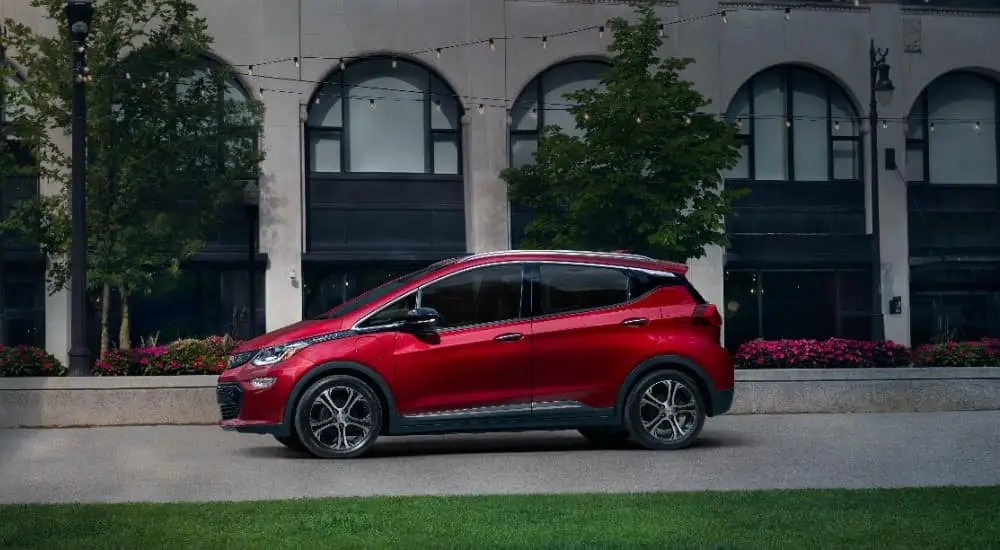
While the technologies needed to make battery-powered electric vehicles a viable form of transportation have only recently been developed, GM and Chevy have a long history of experimenting with electric vehicle concepts. And it is this track record of innovation that has laid the foundation for Chevy’s bright future in the coming world of electric vehicles. In a few years, Chevy will have a large lineup of cutting edge battery-powered designs that will provide the value and performance associated with the Chevy brand while eliminating the need for gasoline entirely. But if you cannot wait for these future designs, then simply head to a GM dealer near you to get your hands on a competitive Chevy electric vehicle today with the Chevy Bolt EV.
The history of GM’s electric vehicles actually began well over 100 years ago in 1912, when GMC produced several hundred battery-powered trucks. In those early days of automobiles, when gasoline engines were noisy, underpowered, and unreliable, there was actually considerable interest in electric vehicles. However, gasoline engines quickly improved by leaps and bounds while battery technology stagnated, making electric vehicles a technological dead-end for decades. It was not until the 1960s and growing concerns about protecting the environment that GM would again revive the idea of building electric vehicles on a large scale.
Chevy Takes the Lead
During this second wave of electric vehicles, Chevy took its current position as the GM’s leading brand for battery-powered vehicles. The work began in 1964 with a prototype modified from an existing Chevy design. Dubbed the Electrovair, this new electric vehicle was a modified Chevy Corvair and took advantage of the new silver-zinc battery technology that had been developed for NASA spacecraft. At the same time this advanced electric vehicle technology was also being used by GM to construct the moon buggies for the Apollo missions. But while the Electrovair demonstrated that electric vehicles were feasible, it still left much to be desired with just 90 horsepower and a very limited range.
However, Chevy was not ready to give up just yet and continued work on its prototype electric vehicles. In 1966, the Electrovair II improved performance to 115 horsepower and up to 80 miles of range, while the 1977 Electrovette (which was based on the Chevy Chevette, not the Chevy Corvette) tested new nickel-zinc battery technology. While none of these designs moved beyond the prototype stage, they laid the groundwork for the first modern mass-produced electric vehicle. This would be unveiled at the 1990 Los Angeles Auto Show as the GM Impact.
Into Production
The GM Impact took several years to make the transition from concept car to production vehicle, but when the renamed GM EV1 finally went on sale 1997, it marked the beginning of a new era. Over 1000 of these futuristic electric cars were leased to drivers in select areas of the United States as part of a test program to determine the feasibility of battery-powered vehicles. However, while the EV1 proved relatively popular, the technology was not quite there to make the car economically feasible, and in 2003 the EV1 was retired, and the existing leases ended.
Alongside the EV1, GM also introduced the Chevy S-10 EV, a purely battery-powered version of the Chevy S-10 pickup that shared many components with the EV1. Also, like the EV1, the S-10 EV was primarily available as a lease rather than for purchase and the program ended after just a few years. However, it was aimed at fleet customers rather than regular consumers, and fewer than 500 of these trucks were built. As the first modern electric truck, the S-10 EV was another important landmark in the history of GM’s electric vehicles.
While the EV1 and S-10 EV may not have become successful production vehicles, they were another step forward to GM’s electric future and gave the company more data on what was needed to make electric vehicles a reality. As part of the lessons from the EV1 program, GM decided to first produce a plug-in hybrid vehicle that could travel on either batteries or gasoline. This was released for sale as the 2011 Chevy Volt. Able to travel 35 miles on electricity alone, the Volt finally gave regular consumers a highly efficient vehicle that they could own.
Buoyed by the success of the Volt, Chevy soon managed to reach its ultimate goal of a commercially viable electric vehicle with the launch of the 2014 Chevy Spark EV. While its 130 horsepower and 82 miles of range may be limited by today’s standards, they marked a historic breakthrough for GM. And once the ball was rolling, GM ran with it and followed up the Chevy Spark EV with the 2017 Chevy Bolt EV. With 200 horsepower and 238 miles of range, this design provided performance every bit the equal of a gasoline car.
Into the future
While Chevy continues to improve its existing electric and hybrid vehicles, it is already planning for the next generation of improved battery-powered cars. The central feature of these future designs is Chevy’s unique Ultium battery technology. This new type of battery will provide enhanced ranges of over 400 miles, DC fast charging, and incredible acceleration times of as little as three seconds from 0 to 60 mph. But most importantly, Ultium batteries will have low costs, eliminating the current premium associated with electric vehicles. As designs equipped with the new Ultium batteries hit the market, drivers will finally have access to affordable electric vehicles that can outperform traditional gasoline cars.
In fact, as electric vehicle technologies continue to advance, they could soon become less expensive than comparable gasoline vehicles. An all-electric powertrain is inherently far simpler than a traditional gasoline powertrain, as it can dispense with engines, transmissions, and differentials in favor of simple electric motors. Further, this lack of moving parts means that electric vehicles are not only easier to build; they also require vastly less maintenance than gasoline cars. With no need for oil changes, new spark plugs, or replacing belts and hoses, the cost to operate an electric vehicle is a small fraction of that of a gasoline car. This is already true of existing battery-powered designs, and the gap will only widen as manufacturers gain more experience with electric vehicles.
While the exact details of Chevy’s future electric vehicle models remain unknown, we can expect a full lineup of cars, trucks, and SUVs. A new Chevy Bolt EV has already been announced for the near future, and several unnamed SUV designs have also been teased. But while the details have not been announced, GM has made it clear that they believe their future is electric. Its current plans call for no fewer than 20 new electric vehicle models by 2023, and billions of dollars have been invested in building the foundation needed to produce the planned one million electric vehicles per year.
The future of electric vehicles is bright, and GM and Chevy are committed to making it happen. And with their extremely long history of developing and producing electric vehicles, there is no other major manufacturer better positioned to take advantage of the coming electric revolution. As the Bolt EV demonstrates, Chevy is already more than capable of building competitive battery-powered cars. Moving into the future, we can expect plenty of even more exciting designs to be announced. When they come out, be sure to check in with us at DePaula Chevy in Albany, NY, for more information.


0 comment(s) so far on The Electric History, and Future, of GM and Chevrolet