


The Mighty Chevy Bolt: A History of Chevy’s First-Ever Affordable EV
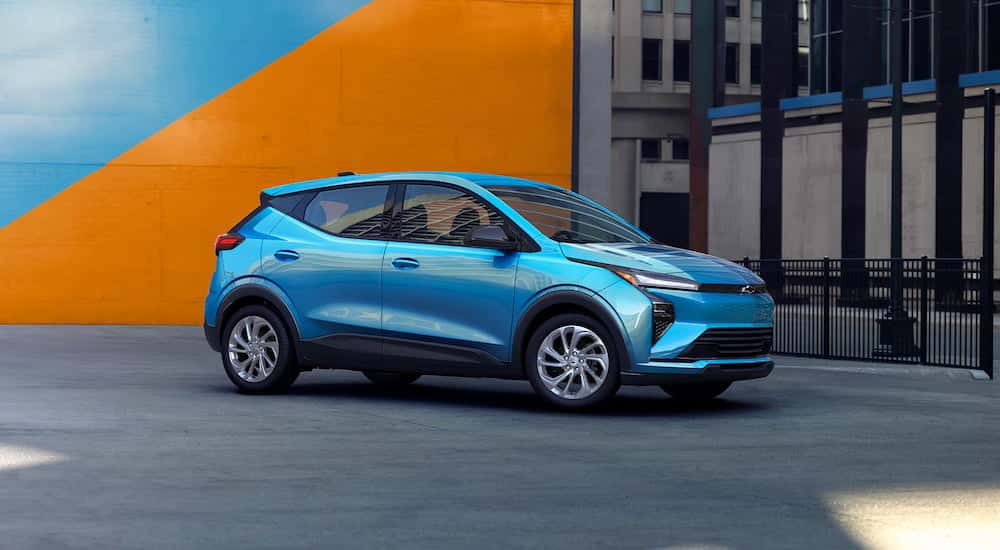
First introduced for the 2017 model year, the adorable Chevy Bolt represented a major shift in the automotive industry. While other manufacturers dabbled in EVs, Chevy launched a mass-market option in the entry subcompact category, a move that paved the way for other automakers to follow suit.
Finding a Chevy Bolt for sale in Albany might require looking at the used market, since Chevy briefly discontinued the Bolt after the 2023 model year. However, the Chevy Bolt is back for the 2027 model year. This version represents a quantum leap in EV technology, along with a more modern style and upgraded in-vehicle tech. But before looking forward, it’s helpful to understand the Bolt’s past and early evolution.
The first-generation Chevy Bolt, manufactured in partnership with tech company LG, was launched not at an automotive show—which was the traditional method used by car companies—but at the 2016 Consumer Electronics Show in Las Vegas. From the start, Chevy positioned the Bolt as a technological marvel, lauding its 200-mile range and affordable price point. This strategy alone alerted the industry to a game-changing shift.
After a series of recalls and other manufacturing hiccups, the bowtie brand discontinued the Bolt and its sibling, the Bolt EUV, in 2023, only to see the buying public revolt. Turns out, this tiny EV has a cult following that remains extremely loyal. In response, Chevy announced the Bolt’s return for 2027. With it comes faster charging, a longer range, and the same fun driving dynamics that won the hearts of so many drivers.
2017: The Launch of a Revolutionary Subcompact EV
When Chevy launched the Bolt in 2017, the headline wasn’t so much its EV powertrain but the automaker’s aggressive price point. Touted as the first all-electric vehicle under $40,000, the 2017 Chevy Bolt offered 238 miles of driving range via a 60-kWh battery. Offered in two trims—the LT and the Premier—the Bolt came with an impressive array of standard features.
LT models included a rearview camera, a large touchscreen, and Michelin self-sealing tires. Upgrading to the Premier enhanced the cabin with heated leather seating. Performance metrics clocked the Bolt’s zero-to-sixty time at an impressive seven seconds. The automotive press was sold. MotorTrend named the Bolt its 2017 “Car of the Year” for its affordability and quality. Car and Driver stated, “Anyone with a typical new-car budget can afford a Bolt.” With the mighty Bolt, Chevy had hit the sweet spot of innovation and affordability.
Though modern EVs offer driving ranges that exceed 300 miles, the Bolt’s 238-mile range satisfied early EV buyers. In-vehicle tech supplied the driver with three range monitors: maximum, minimum, and best estimate, calculated by driving habits and use of onboard energy depleters (e.g., climate control). Fast charging was also available as an optional add-on, giving buyers more options for juicing up.
Ride handling impressed reviewers. The Bolt handled well on varied terrain, and range estimates stayed true to the reading on the dash. The Bolt’s adorable hatchback body style gave it curb appeal, which was essential to younger buyers. Chevy rode the wave of interest and positive press, moving into future model years with confidence.
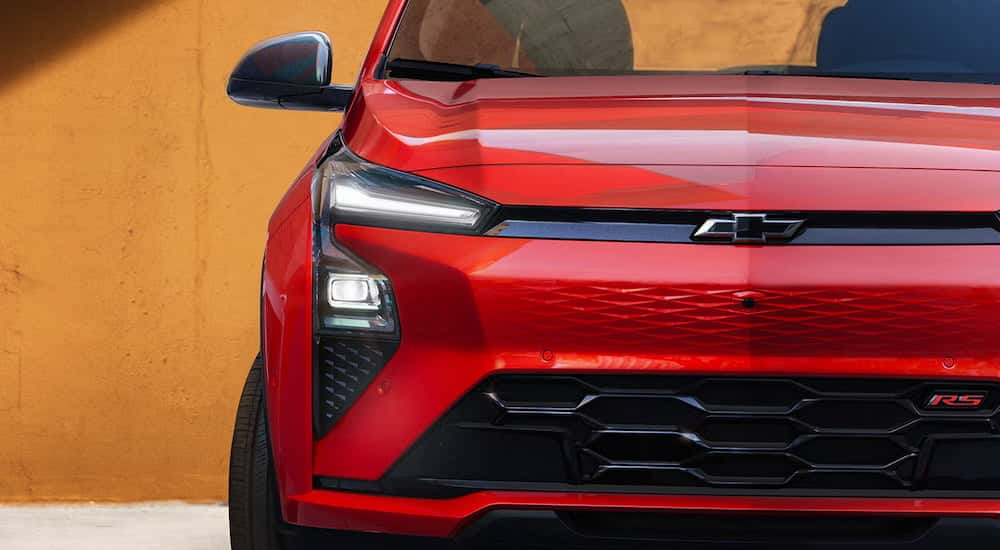
2018 – 2023: The Bolt’s Continued Evolution and Surprising Discontinuation
Riding into the following year, the 2018 Bolt earned an “Editors’ Choice” award from Car and Driver. Most notably, the Bolt remained the only sub-$40,000 EV on the market, carving out a unique spot in the EV category. Chevy added a heated steering wheel to the Premier trim and made it optional on the LT. Otherwise, the model year had very few changes.
Moving into 2019, Chevy made a few changes to the Bolt, but for the 2020 model year, the estimated range increased to 259 miles. This change catapulted the Bolt to the top spot for driving range, ahead of major competitors like the Kia Soul EV and the Tesla Model 3. In 2022, the Bolt was redesigned with new styling on the exterior and in the cabin. Best of all, Chevy lowered the Bolt’s price by more than $5,000.
The 2023 model year was the last year Chevy manufactured the Bolt. Once again, the starting MSRP was lowered by almost $6,000. Many believed the price cut served two purposes: first, to buffer the car’s reputation after a massive recall; and second, to offset the loss of the federal tax credit, for which Bolt buyers were no longer qualified due to the Bolt’s sales volume. Though sales remained steady, Chevy elected to discontinue the Bolt.
The 2027 Chevy Bolt Reimagined
Chevy Bolt fans rejoiced when the automaker announced the return of its affordable subcompact EV. The 2027 Bolt arrives with updated styling and the same low price point as its predecessors. Chevy includes North American Charging Standard (NACS) compatibility so drivers can utilize the Tesla charging network, which is great news for road trippers and long-range commuters.
Chevy is proceeding with caution, as the automaker anticipates demand for EVs will level off in the coming years; however, for diehard Chevy Bolt devotees, the news of its return is welcomed. With a history of reliability and affordability, it’s tough to beat the Bolt’s value proposition. Further, Chevy focused on small details that are important to buyers: namely, technology.
The 2027 Chevy Bolt features a standard 11.3-inch infotainment touchscreen and an 11-inch Driver Information Center. The digitized dash lends the cabin a futuristic vibe. Offered in two trims—the base LT and the RS—the newest Bolt boasts 210-hp and a massive 20 standard safety and driver-assistance features. Range clocks in at an impressive 255 miles, and both Bolt trims come with standard DC Fast Charging capability. It’s clear that this model is coming back strong and making its presence known in the ever-increasing subcompact SUV segment, making it a fantastic entry-level EV option for drivers new to electric SUVs, and now it’s your turn to experience it for yourself.
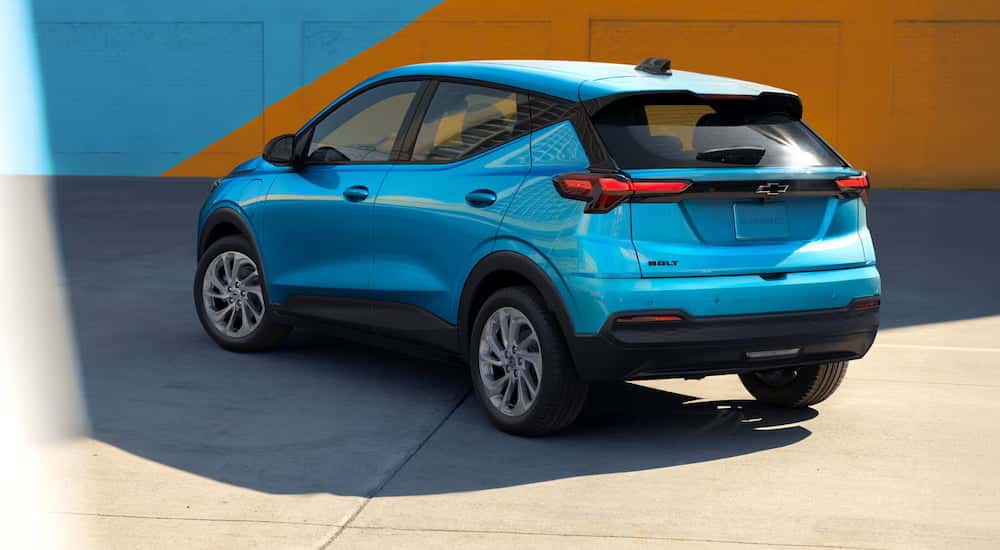
Can the Newest Bolt Compete in the Expanding EV Market?
The big question on industry watchers’ minds is—can the Bolt go head-to-head with the competition? The answer is an enthusiastic yes. The Bolt enjoys substantial name recognition and a more extended production history than competitive EVs in the subcompact category. Further, General Motors has made tremendous strides in lithium-ion battery technology, offering a higher-quality battery system than previous Bolt generations.
For buyers looking at an EV who refuse to upgrade to expensive alternatives, the Bolt’s $28,595 price tag offers great value.[a] Chevy also provides its Super Cruise hands-free driving technology, along with other popular tech-forward features like a wireless phone charger and Google built-in compatibility. Add to that a fun palette of exterior colors, and the Bolt is an excellent option for budget-conscious drivers who don’t want to compromise curb appeal.
The future of the entry-level EV market remains uncertain, but Chevy demonstrates its commitment to affordability with the 2027 Chevy Bolt, continuing its promise to make EV driving accessible to everyone. Not all vehicles at this price point offer NACS charging capability, which is a big benefit. Additionally, the Bolt’s impressive driving range puts it in the mix among an increasingly cluttered subcompact EV category.


0 comment(s) so far on The Mighty Chevy Bolt: A History of Chevy’s First-Ever Affordable EV