

What Does the Future Hold for the Corvette?

While the automotive junkies of New York eagerly awaited the highly-anticipated arrival of the 2022 Corvette Z06 at their favorite Albany car dealership, their joy was deflated by the announcement that the Z06 would not be coming out until 2023. Chevy released short teaser videos accompanied by blurbs about the reveal date of the new Z06, set to be viewed on October 26, 2021. With snippets of the prototype shown in the teaser, the body of the Z06 is clearly visible along with the buzz of its high-powered engine as it wails over roads in secret locations that allow wildly speedy vehicles to drive as fast as they like.
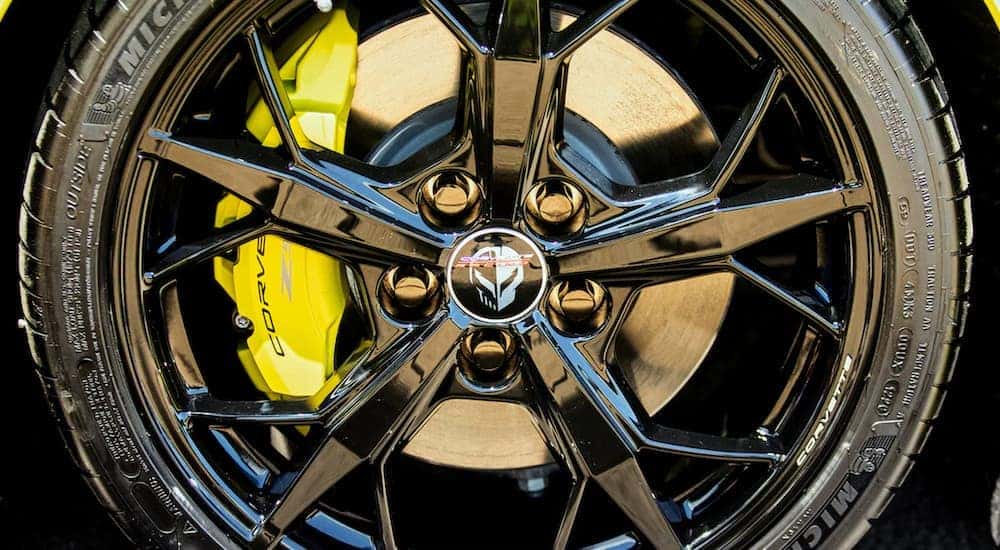
Though the pandemic shutdown production of the Corvette Z06 and pushed back its release date, plenty of other news is leaking out of Chevy about future Corvette variants that make the already outrageous figures from the Z06 sound like the difference between riding a horse and hopping into a Lambo for transport. For reference, the Z06 is expected to harness a stout 625 horsepower with a redline at 9,000 rpm. Such an achievement will be accomplished with its naturally-aspirated 5.5-liter flat-plane-crank V8, assisted by Michelin Sport Cup tires and aerodynamics that make the ‘Vette look more like it could fly rather than drive. And yet, this is only the beginning.
If this information about the upcoming Z06 is correct, Chevy will be unleashing the most powerful naturally-aspirated engine in the world into the automotive space. While this news is exciting, it bears noting that Chevy made a splash in the media when it released its new C8 ‘Vette with a mid-engine setup. Past generations of the Corvette have all been built with the engine up front, but faster sports cars like the Ferrari 488 and the Lamborghini Huracan place the engine behind the driver’s seat. Moving the engine to the middle of the vehicle gives sports cars better stability and handling because weight shifts toward the back and allows for swifter acceleration.
Motortrend rewarded this choice in the C8 with its 2020 Motortrend “Car of the Year” award, but it certainly shook Corvette fans with such a big change after decades of performance from its former engine placement under the long front hood. And now Chevy is reportedly planning several more C8 variants for the future, some of which look to be hybrids. All of them, if the rumors are correct, will leave current Corvettes in the dust with their speed and agility.
Present Corvettes Provide Reference
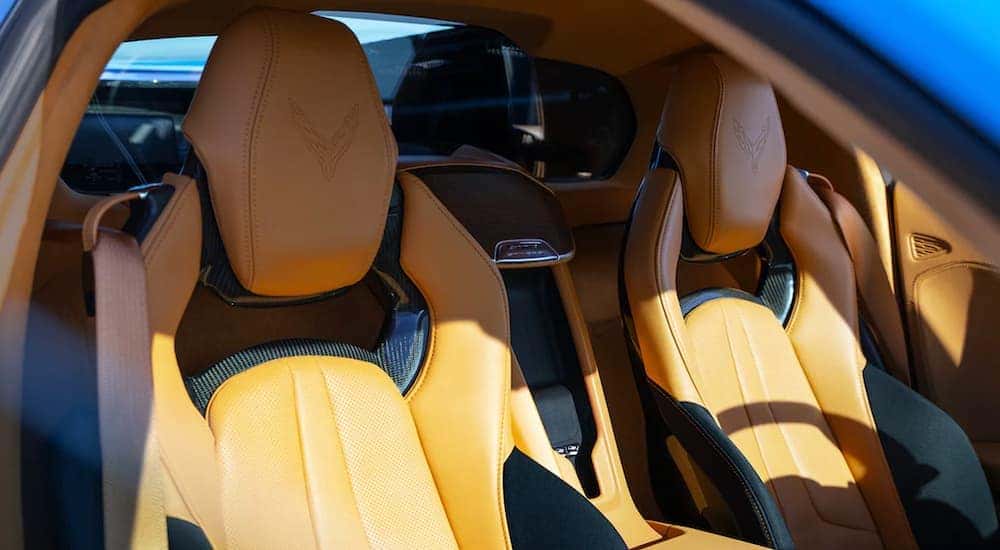
The 2022 Corvette models available today are currently two years into the new C8 generation. With the mid-engine setup now the standard, the 2022 Corvette Stingray will continue to be sold with the 6.2-liter LT2 V8 that is naturally aspirated. Horsepower harnessed by this engine roars at 490 at 6,450 rpm with 470 lb-ft of torque at 5,150 rpm. For the upcoming 2022 models, new fuel injectors and pumps will make it possible for higher fuel pressures to improve engine efficiency. An automatic dual-clutch transmission takes charge of shifting for seamless performance.
With this engine, the Stingray boasts an incredible zero to 60 time of 2.9 seconds. That isn’t far off from the 2020 Ferrari Pista Spider zero to 60 time of 2.7 seconds, or the 2020 Lamborghini Huracan EVO Spyder, which boasts the same 2.7 second time. Car and Driver tested the 2022 Corvette and found the C8 actually achieved a time of 2.8 seconds and hit the quarter-mile mark in 11.2 seconds at a speed of 122 mph. Again, to compare the Corvette with the Ferrari and Lambo, the Corvette is only about a second away from achieving the same kind of speed as these high-end supercars, and you can have a Corvette for roughly $60,000. That’s a fraction of what you would pay for the European cars, and you get close in performance.
The Future Is Even Faster
After the release of the Z06 occurs, leaked news suggests that next in line will be a new variant of the ZR1. Expectations are that the ZR1 will be configured with twin turbochargers added to the already potent Z06 engine to increase its output to anywhere from 800 to 850 horsepower. Beyond this, supposition gets very interesting with the Corvette E-Ray, which is expected to be a hybrid that will combine the standard 6.2-liter V8 engine already driving the C8 with electric power. Electric motors would potentially be fitted to the front axle, with the option of adding another electric motor to the mix if Chevy chooses to power the rear axle as well. News at the water cooler is that the potential for this variant could be all-wheel drive, and this hybrid would plug in for charging.
Finally, the most mouth-watering variant of all the possible Corvettes to be let loose from the Chevy ranks could be called the Zora, in honor of Zora Arkus-Duntov, the original designer of the Corvette. Such a vehicle could truly change history if the rumors prove to be true. The Zora allegedly would pair the Corvette E-Ray electric motor with the engine from the ZR1 (the engine that could hit up to 850 hp) to create an unheard-of machine with gobsmacking power. This future Corvette would also be a plug-in hybrid, and its potential output could reach as high as 1,000 horsepower. It stands to reason that such powerful vehicles would be suited to the race track, which is likely where we could plan to watch them perform.
Though some ‘Vette fans might be dismayed to hear about plans to go hybrid with the powertrains of two future variants, keep in mind that electric motors offer instant torque that can be harnessed for quick start-ups from zero. While zero to 60 times for the current generation of Corvettes are already impressive, electric power could shorten those times significantly with the right engineering and all-wheel drive. Sticky tires will no doubt be employed as well. One small tidbit of further news indicates the potential for a fully electric Corvette to be slated for the future, which lines up with GM’s new zero-emissions mission. Even if that rumor is true, absolutely no speculation exists on that potential vehicle…yet.
Where Will the Corvette Go Next?
Even if we lament the potential passing of gas-powered engines, perhaps it can help to consider the early days of automobiles. At first, motorized vehicles encroached on the horse and carriage businesses while motor cars shared the streets with horse-drawn buggies in much the same way electric vehicles now share roads with gas-powered vehicles. Right now, EVs are still in the minority as manufacturers innovate ways to make EVs more affordable and practical, not unlike early gas-powered engines when they still struggled to function reliably. Humans are adaptable when good ideas and good engineering take hold of the public eye, and the future Corvettes built with electric power are likely to become as normal for drivers as our beloved gas engines are today.
No doubt future drivers will wonder how we ever managed with the noise and odor of gas power, just the way most drivers today have a hard time imagining what it would be like to travel by horse-drawn carriage. Whatever our ideas may be about electric cars, recent moves within the GM ranks suggest they are planning to take that direction with their flagship sports cars. Engineers and designers from both Corvette and Camaro have been incorporated into the EV planning department, so speculation thus far is leaning toward electric Corvettes in the coming years.


0 comment(s) so far on What Does the Future Hold for the Corvette?