


A Few Things Every Driver Should Know
Here at DePaula Chevrolet, we’re not just the best new and used car dealer in Albany; we have a full service department to keep your vehicle running in tip-top condition, as good as the day you drove it off our lot. While we are more than happy to take care of all your service needs, from regularly scheduled maintenance to major repairs, there are definitely some things that all drivers should know how to do themselves, whether it’s a quick fluid check to make sure everything’s topped up or finally figuring out jumper cables. Keeping your car maintained and knowing what to do when stranded with a dead battery will make your life easier in the long run and provide much-needed peace of mind, fewer what-ifs to worry about. We’ll start our To Learn list somewhere away from the engine, at your window to the world: the windshield.
Change Your Windshield Wipers
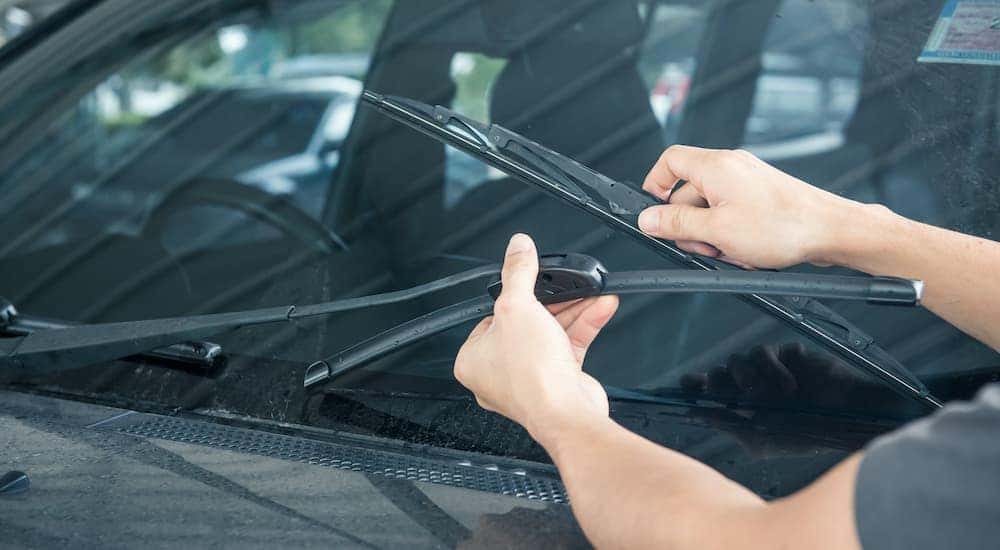
Windshield wipers need to be changed more often than you think: at least once a year, more often if you notice they’re not doing their job. As the rubber in the wiper blades breaks down from use – and the hot sun on non-rainy days – it causes not just annoying streaks, which can be a real danger while driving on slick roads, it can even lead to scratches on your windshield. Luckily, changing your wiper blades takes practically no time at all.
The first step is to figure out what size blades you need. You can check your owner’s manual, take a measuring tape to the existing blades, or look up your vehicle’s make and model on the manufacturers’ charts when you purchase the replacements. Many vehicles have different size blades on each side, so be sure to check both. Once you have the new wiper blades in hand, gently pull the first wiper arm away from the windshield. They’re often springloaded, so be sure to keep one hand on the wiper, so it doesn’t fly back into the glass.
Look under the wiper, where it meets the arm, and you should see a little tab. Press on that to unhook the worn-out wiper blade and slide it off. Reverse the process to slide on the new blade. You’ll hear the tab click when you get the blade into its proper position. Carefully lower the wiper arm back down and repeat on the other side. This exact process may be a little bit different depending on the type of wipers your car has and how they connect, but they should still be easy to figure out.
Check Fluid Levels
Now that you’ve got nice, fresh windshield wiper blades, you’ll want to check your windshield wiper fluid. It’s just one of the many liquids that help your vehicle work its best. You can usually find the reservoir to the side of the engine compartment. If you’re refilling wiper fluid more often than it feels like you should be, you might have a leak. Replacing that is going to be a much bigger job, but we’ll be happy to help you out.
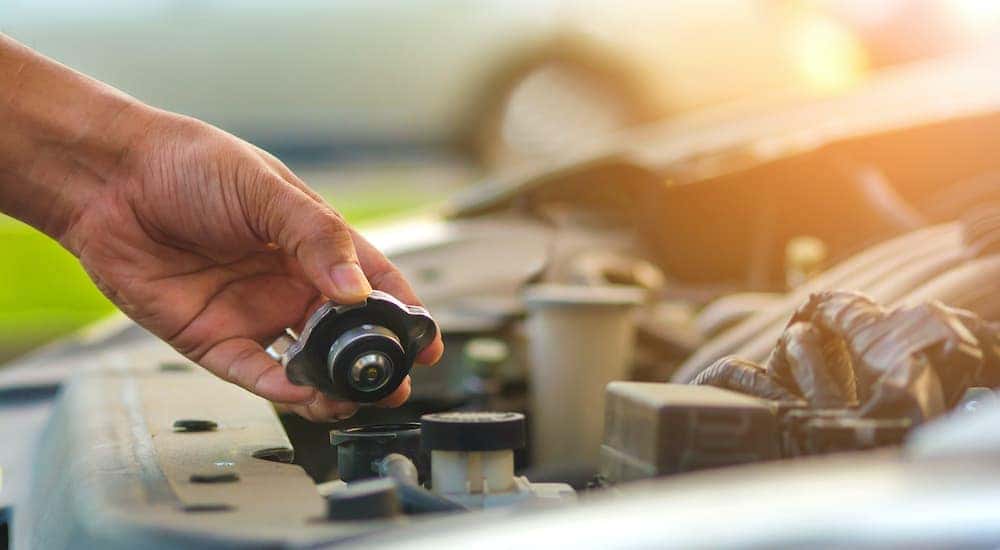
While it’s generally obvious when you need new windshield washer fluid, it’s less obvious to know how your vehicle’s coolant is doing. Before you get an overheating warning on your dash, make it a habit to check the coolant level. Usually, it’s obvious with just a glance at the reservoir, which is located beside the radiator. Coolant needs to be mixed with water, or you can buy it pre-mixed. Either way, it’s usually a bright color, so if the fluid level looks ok, but the fluid itself looks dirty or dull, you’ll want to have it drained and refilled. It’s important to note that you should only add coolant to a cool engine; otherwise, you could get burned or cause serious damage to the engine block.
Hopefully, you’re keeping up with regularly scheduled maintenance and getting your oil changed on time. There are definitely times, however, that you’ll want to check the oil level between appointments. Visible exhaust, increased engine noise, and your vehicle starting to shake when it’s idling may all be signs that your oil level is low. Each model is different, but the process is generally the same unless you have a vehicle that uses electronic oil sensors and does not allow for manual checks. For everyone else, you’ll want to be parked on a level surface, turn off the engine, and allow it to cool for around 15 minutes.
When you pop the hood, you’ll usually find that the dipstick handle is colored something bright, and it will have an oil can symbol on it. Have a paper towel or a rag you don’t care about handy and pull on the loop – we won’t tell if you pretend you’re pulling Excalibur out of the stone like a young King Arthur – to remove the dipstick. When you wipe the end, you’ll notice two lines: the top one means that the oil tank is full and all is well, while the lower one means you’re a quart low. Some newer models have dipsticks that literally spell it out, replacing the lines with text like “add” and “safe.” After cleaning the dipstick, you’ll want to reinsert it, wait a moment, then remove it again to get your reading. If your oil level is low, you could add more yourself, but you’ll want to get a proper diagnosis to ensure there isn’t a serious problem.
Jump a Dead Battery
Jumper cables are never a bad investment. For under $20, you can have peace of mind, knowing a dead battery won’t ever keep you down for long. You can even help out your stranded friends or a stranger in a grocery store parking lot. Jumping a battery can seem intimidating and for good reason! There’s a lot of dangerous voltage at work, and a small spark can ignite vapors that have built up under the hood. But with a few simple steps, you can safely power back up.
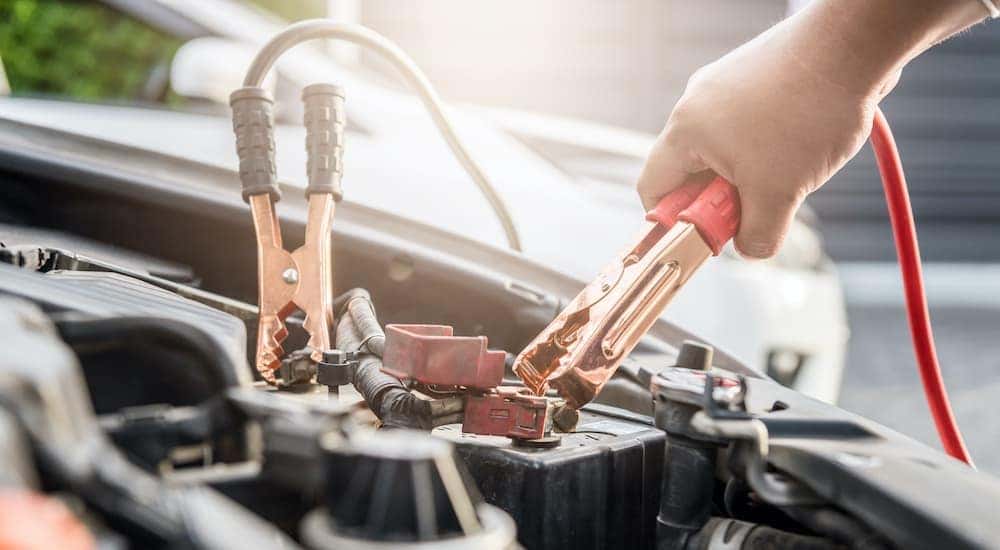
Firstly, you’ll need a car with a working battery to provide the jump. Park it facing the disabled vehicle, allowing room to move between them. Be sure both vehicles are fully powered down with the parking brakes set before opening the hoods. You’ll notice each battery has a positive and negative terminal, or if the battery is hidden, there will be positive and negative marked posts to use for jumping. Clamp one of the red jumper cables to the positive terminal in the dead car. Before you attach the other end of the positive cable to the working car’s positive cable, be sure neither end of the black cable is touching anything metal. After the red cable is connected to the working battery, attach one end of the black cable to its negative terminal. Then ground the negative cable by attaching the loose end to something metal and unpainted on the dead car, away from the battery, like a bolt or bracket, or the piece that holds the hood up.
Before turning on the working car, verify that the cables haven’t flopped into the engine area where they could get caught on a belt or other moving part. Then have the working car idle for a bit to build up the charge. After a few minutes, try to start the dead car. If the battery is particularly worn out, it may take a few more minutes of charge time.
Once the previously dead battery turns over, keep both cars idling for a few minutes more to verify the recharge. To disconnect the cables, reverse the process you used to attach them. Take extreme caution after removing the grounded negative cable from the car that was jumped; have the other driver help hold it securely, so it doesn’t touch anything metal or any of the other clamps. After that, just make sure you drive around for 15 or 20 minutes so the alternator can add more charge to the jumped battery.
Instead of jumper cables, you might want to consider a portable jump starter instead. They cost a bit more but don’t require finding a friend or a good samaritan. The process is largely the same: connect the red, positive cable, and ground the black one. If you keep a portable jump starter in your trunk, don’t forget to recharge it every few months, so you don’t have two dead batteries.
DePaula Chevrolet
DePaula Chevrolet has been a GM Dealer of the Year for 11 years in a row, and we are the #1 Chevrolet Certified Pre-Owned Dealer in all of the Northeast. But we’re not just here to sell you a car; we want to help you keep it running for years to come. We hope these tips give you more confidence when you drive. Vehicles aren’t just crucial to our lives; they’re a major investment, and knowing you can do a few things to keep yours running its best is a great feeling.
For the rest of your maintenance and service needs, though, come see us at DePaula Chevrolet. Our service and parts departments are staffed with trained technicians who can replace a scratched windshield, diagnose an oil leak, and replace a worn-out battery, along with anything else you might need. So, know these ways to take care of your vehicle yourself, and for everything else, let us take care of it for you.


0 comment(s) so far on A Few Things Every Driver Should Know